
Breaking down language barriers has never been more critical than in today’s hyperconnected global economy, where a single conversation can bridge continents and cultures. Voice translator technology has emerged as a revolutionary solution, transforming how we communicate across linguistic divides by converting spoken words from one language to another in real-time. What once required human interpreters or cumbersome translation processes now happens instantly through sophisticated AI-powered systems that understand, process, and vocalize translations within seconds.
The demand for instant voice translator solutions has skyrocketed as businesses expand internationally, travelers venture to new destinations, and remote collaboration becomes the norm. From boardroom negotiations in Tokyo to emergency medical consultations in rural villages, vocal translator technology is reshaping human interaction on a global scale. These voice to voice translator systems have evolved far beyond simple word-for-word conversions, now capturing context, tone, and cultural nuances that make conversations feel natural and meaningful.
This comprehensive guide explores the cutting-edge world of voice translation technology, examining everything from core technical mechanisms to practical selection criteria. You’ll discover how different voice translation solutions work, their real-world applications across industries, and the key factors that determine which system best fits your specific communication needs.
Understanding Voice Translation Technology
Voice translation technology represents one of the most sophisticated achievements in artificial intelligence, combining multiple complex systems to enable seamless communication across language barriers. A voice translator transforms spoken words from one language into another in real-time, creating an experience that feels almost magical yet relies on intricate technological processes working in perfect harmony.
How Voice-to-Voice Translation Works
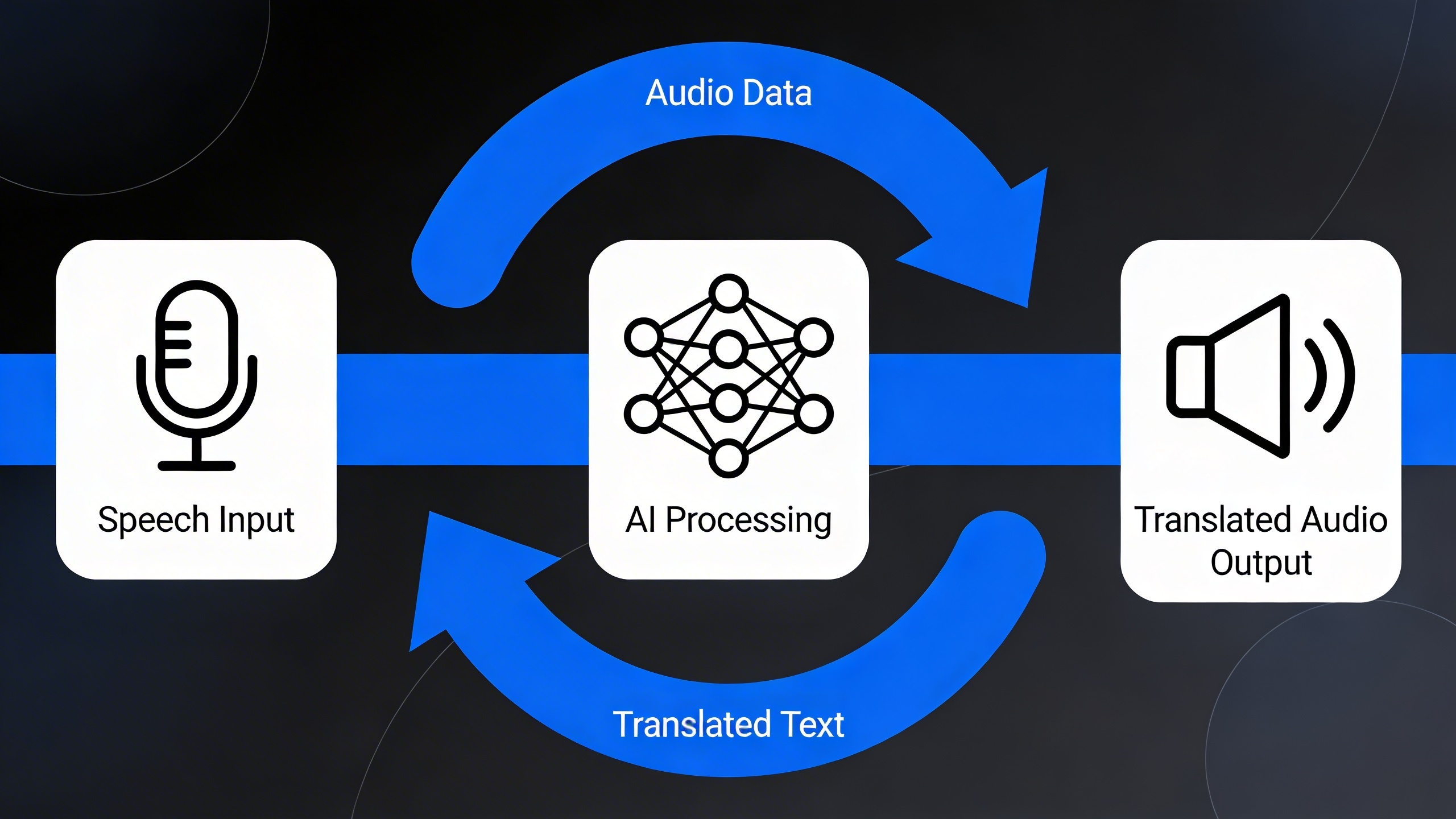
The process of voice to voice translator technology involves three distinct stages that must execute flawlessly within milliseconds. First, the system captures and processes the speaker’s audio input, converting sound waves into digital signals that can be analyzed. Advanced algorithms then identify speech patterns, phonemes, and linguistic structures to understand what was actually said.
Once the speech is recognized, the system performs the translation itself, converting the meaning from the source language to the target language. This isn’t simply word-for-word replacement but involves understanding context, cultural nuances, and grammatical structures that vary dramatically between languages. Finally, the translated text is converted back into natural-sounding speech in the target language, completing the voice translation cycle.
Modern vocal translator systems can complete this entire process in under two seconds, making conversations feel natural and spontaneous. The key lies in parallel processing, where multiple components work simultaneously rather than sequentially, dramatically reducing the overall processing time.
Core Components and Processing Pipeline
The foundation of any effective instant voice translator rests on three critical technologies working in concert. Automatic Speech Recognition (ASR) serves as the entry point, using deep learning models trained on millions of hours of human speech to accurately convert audio into text. These systems must handle various accents, speaking speeds, background noise, and speech patterns to maintain reliability.
Neural Machine Translation (NMT) forms the intellectual core of the system, employing transformer-based architectures that understand context and meaning rather than simply matching words. Unlike earlier rule-based systems, modern NMT models can grasp idioms, cultural references, and complex grammatical structures, producing translations that preserve both meaning and intent.
Text-to-Speech (TTS) synthesis completes the pipeline by converting translated text back into natural-sounding speech. Advanced TTS systems use neural networks to generate human-like intonation, pronunciation, and rhythm, making the output sound conversational rather than robotic. The quality of TTS directly impacts user experience, as unnatural-sounding speech can disrupt communication flow.
Accuracy and Language Support Evolution
The accuracy of voice translation technology has improved dramatically over the past decade, with leading systems achieving over 95% accuracy for common language pairs like English-Spanish or English-French. However, accuracy varies significantly based on several factors including language pair complexity, speaker accent, audio quality, and domain-specific vocabulary.
Language pair complexity presents unique challenges for voice translator systems. Languages with similar grammatical structures and shared vocabulary roots typically achieve higher accuracy rates. Conversely, translating between languages with fundamentally different structures—such as English to Mandarin or Arabic to Japanese—requires more sophisticated processing and often results in slightly lower accuracy rates.
Real-time processing introduces additional constraints that developers must carefully balance. The system must prioritize speed while maintaining quality, leading to ongoing optimization challenges. Latency reduction techniques include predictive processing, where the system begins translation before the speaker finishes their sentence, and edge computing, which moves processing closer to the user to reduce network delays.
Modern voice translation platforms now support over 100 languages, with continuous expansion driven by improved training data and more efficient algorithms. The technology continues evolving rapidly, with emerging capabilities including emotion detection, speaker identification, and context-aware translation that considers previous conversation history to improve accuracy and naturalness.
Types of Voice Translation Solutions
The voice translation landscape offers diverse solutions tailored to different communication scenarios and user needs. Understanding the various types of voice translator technologies helps you select the most appropriate tool for your specific multilingual communication requirements.
Real-Time Conversation Translators
Bidirectional voice translators represent the pinnacle of conversational translation technology, enabling seamless two-way communication between speakers of different languages. These sophisticated systems process speech from both participants, translating utterances in real-time while maintaining the natural flow of conversation.
Modern conversation translators excel in face-to-face interactions where immediate response is crucial. Business negotiations, medical consultations, and customer service interactions benefit tremendously from these voice to voice translator solutions. The technology typically features speaker identification, allowing the system to distinguish between different voices and maintain conversation context throughout extended dialogues.
Advanced conversation translators incorporate noise cancellation and acoustic optimization to function effectively in challenging environments. Conference rooms, busy restaurants, and outdoor settings no longer pose insurmountable barriers to cross-language communication when using professional-grade vocal translator systems.
One-Way Voice Translation Tools
Unidirectional translation solutions serve specific scenarios where communication flows primarily in one direction. These instant voice translator tools prove invaluable for presentations, lectures, announcements, and content consumption where the speaker addresses an audience rather than engaging in dialogue.
Educational institutions frequently deploy one-way voice translation systems for international students attending lectures in non-native languages. Tour guides utilize these tools to provide multilingual commentary without requiring tourist participation. Broadcasting and media organizations leverage unidirectional translation for live event coverage and international news delivery.
The streamlined nature of one-way systems often results in faster processing speeds and reduced computational overhead compared to bidirectional alternatives. This efficiency makes them ideal for scenarios requiring minimal latency, such as simultaneous interpretation during large conferences or webinars.
Integrated Translation Platforms
Comprehensive translation platforms combine voice translation capabilities with broader communication tools, creating unified solutions for modern digital workflows. These platforms integrate seamlessly with video conferencing software, messaging applications, and productivity suites to provide contextual translation support across multiple communication channels.
Enterprise-focused integrated platforms offer API access for custom implementations, allowing organizations to embed voice translation functionality directly into their existing software ecosystems. This integration capability enables businesses to create tailored multilingual communication solutions that align with their specific operational requirements and user interfaces.
Cloud-based integrated platforms provide scalability advantages, supporting everything from individual user needs to enterprise-level deployments serving thousands of simultaneous users. These solutions often include advanced features like conversation transcription, translation history, and collaborative editing tools that extend beyond basic voice translation functionality.
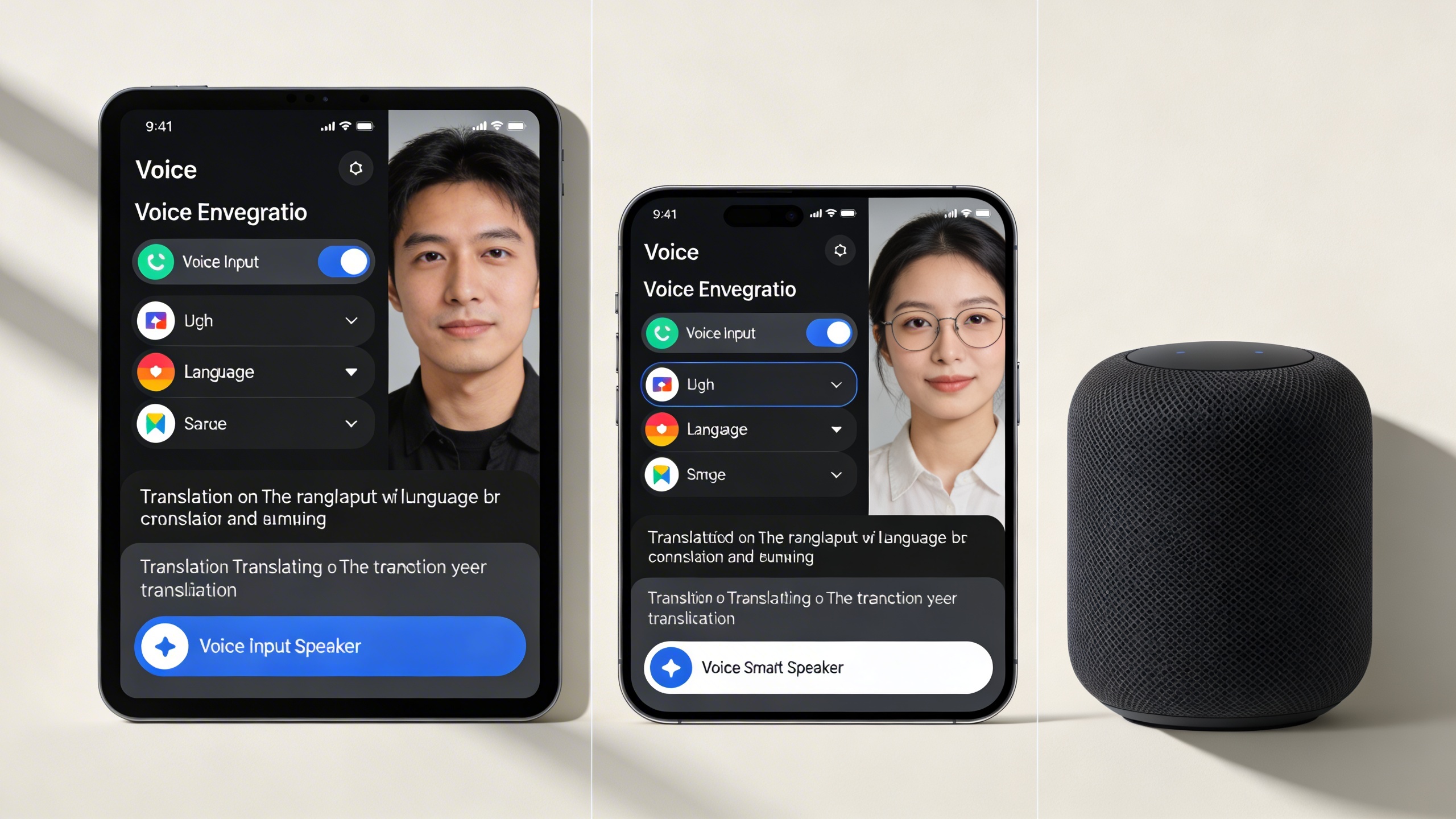
Device compatibility represents a critical consideration when selecting integrated platforms. Modern solutions support deployment across smartphones, tablets, desktop computers, and specialized hardware devices. Cross-platform synchronization ensures users maintain access to translation history and preferences regardless of their current device, creating a consistent experience across different technological environments.
The choice between standalone voice translator applications and integrated platforms depends largely on your specific use case requirements, existing technology infrastructure, and long-term scalability needs. Organizations with complex communication workflows often benefit from integrated solutions, while individuals and small teams may find dedicated translation tools more appropriate for their immediate needs.
Key Features to Evaluate in Voice Translators
Selecting the right voice translator requires careful evaluation of several critical features that directly impact user experience and translation effectiveness. Whether you need a solution for business negotiations, travel communication, or educational purposes, understanding these key characteristics will help you choose a vocal translator that meets your specific requirements.
Language Support and Accuracy Metrics
The foundation of any effective voice to voice translator lies in its language coverage and translation precision. Leading platforms typically support between 50 to 100+ languages, but the quality varies significantly across different language pairs. Major languages like English, Spanish, French, and Mandarin generally receive the most development attention, resulting in higher accuracy rates often exceeding 90% for clear speech.
When evaluating language support, consider both the breadth of available languages and the depth of regional dialect recognition. A comprehensive voice translator should handle not just standard languages but also regional variations, such as Mexican Spanish versus Argentinian Spanish, or British English versus American English. This granular support becomes crucial for accurate cultural and contextual communication.
Translation accuracy metrics vary based on several factors including audio quality, speaker accent, background noise, and sentence complexity. Professional-grade solutions often provide confidence scores alongside translations, helping users understand the reliability of each converted phrase. Look for systems that offer accuracy rates above 85% for your target language pairs, as anything below this threshold may lead to miscommunication in important conversations.
Speed and Latency Performance
Response time significantly impacts the natural flow of conversations when using an instant voice translator. Modern solutions aim for processing times under 2-3 seconds from speech input to translated output, though this varies based on sentence length and complexity. Cloud-based systems typically offer faster processing due to powerful server infrastructure, while device-based solutions may experience slight delays during complex translations.
Latency optimization involves multiple technical factors including speech recognition speed, translation processing time, and text-to-speech generation. The most effective voice translation solutions employ advanced algorithms that begin processing speech before the speaker finishes talking, reducing overall response time. This parallel processing approach enables more natural conversation flow, particularly important in business meetings or time-sensitive discussions.
Network connectivity directly affects translation speed for cloud-dependent systems. High-speed internet connections enable real-time processing, while slower connections may introduce noticeable delays. Understanding these performance characteristics helps users set appropriate expectations and choose solutions that align with their typical usage environments.
Offline Capabilities and Connectivity
Offline functionality represents a crucial feature for travelers and professionals working in areas with unreliable internet access. Advanced vocal translator applications store essential language models locally, enabling basic translation capabilities without network connectivity. While offline translations may have reduced accuracy compared to cloud-based processing, they provide essential communication support in remote locations or during network outages.
The trade-off between offline capability and translation quality varies among different solutions. Offline modes typically support fewer languages and may struggle with complex sentence structures or technical terminology. However, for basic conversational needs, offline voice translators can maintain 70-80% accuracy for major language pairs, sufficient for essential communication scenarios.
Hybrid approaches offer the most flexibility, automatically switching between online and offline modes based on connectivity availability. These systems download updated language models when connected, ensuring offline capabilities remain current with the latest improvements. For users requiring consistent translation access regardless of location, hybrid voice translator solutions provide the most reliable experience.
When evaluating offline capabilities, consider the storage requirements for downloaded language packs, as comprehensive offline support may require several gigabytes of device storage. Additionally, assess how frequently offline models receive updates and whether the system can seamlessly transition between online and offline modes without user intervention.
Real-World Applications and Use Cases
Voice translation technology has revolutionized communication across countless industries and scenarios, making previously challenging language barriers manageable with just a few taps on a device. From corporate boardrooms to bustling tourist destinations, these solutions are transforming how people connect across linguistic divides.
Business and Professional Communication
International business meetings represent one of the most demanding environments for voice translator technology. During negotiations with overseas partners, executives rely on instant voice translator capabilities to maintain natural conversation flow while ensuring accuracy in critical discussions. Modern vocal translator systems excel in these scenarios by recognizing business terminology, industry jargon, and formal speech patterns that traditional translation methods often struggle with.
Customer service departments increasingly deploy voice translation solutions to serve diverse client bases without requiring multilingual staff for every language combination. Support representatives can now assist customers in real-time, with the voice to voice translator handling complex technical explanations and troubleshooting instructions. This approach significantly reduces resolution times while improving customer satisfaction across language barriers.
Remote work environments have created new demands for seamless international collaboration. Teams scattered across continents use voice translation during video conferences, enabling spontaneous discussions that would otherwise require scheduling interpreters or limiting participation to English speakers only.
Travel and Tourism Applications
Travel scenarios showcase voice translation technology at its most practical. Tourists navigating foreign countries rely on instant voice translator apps for everything from ordering meals to asking for directions. The technology proves invaluable when dealing with emergency situations where clear communication can be critical for safety and resolution.
Restaurant interactions demonstrate the nuanced capabilities of modern vocal translator systems. Beyond simple menu translations, these tools handle dietary restrictions, cooking preferences, and cultural food customs that require contextual understanding rather than literal word-for-word conversion.
Transportation hubs like airports and train stations benefit enormously from voice translation solutions. Travelers can communicate with staff about gate changes, delays, or connection information without language anxiety. Many transportation companies now integrate these systems into their customer service protocols to assist international passengers more effectively.
Hotel and accommodation staff use voice to voice translator technology to provide personalized service regardless of guest language preferences. From explaining local attractions to handling special requests, these tools enable hospitality workers to maintain their service standards across all language combinations.
Educational and Learning Environments
Language learning classrooms have embraced voice translation as both a teaching aid and a confidence-building tool. Students practice pronunciation while receiving immediate feedback through vocal translator systems that can identify accent patterns and suggest improvements. Teachers use these tools to demonstrate proper pronunciation across multiple languages during comparative linguistics lessons.
International universities leverage voice translation technology to support diverse student populations. During lectures, seminars, and study groups, students can clarify complex concepts in their native languages before engaging in English discussions. This approach reduces the cognitive load of processing both language and content simultaneously.
Exchange programs and study abroad initiatives rely heavily on instant voice translator capabilities to ease cultural transitions. Students can navigate administrative processes, understand local customs, and build relationships with local peers more quickly when language barriers are minimized through technology.
Healthcare communication represents perhaps the most critical application of voice translation technology. Medical professionals use these systems to gather patient histories, explain procedures, and ensure informed consent across language barriers. The precision required in medical settings has driven significant improvements in domain-specific vocabulary recognition and translation accuracy.
Emergency medical situations particularly benefit from voice to voice translator systems that can quickly establish communication between first responders and patients who speak different languages. These tools help medical teams understand symptoms, allergies, and medical histories that could be life-saving information during critical care situations.
The versatility of modern voice translator technology continues expanding as developers refine algorithms and expand language databases. Whether facilitating international business deals or helping travelers order coffee in a foreign café, these solutions are becoming indispensable tools for global communication.
Technical Considerations and Limitations
While voice translator technology has advanced significantly, several technical factors can impact performance and user experience. Understanding these limitations helps set realistic expectations and guides selection of the most appropriate solution for your specific needs.
Audio Quality and Environment Factors
The effectiveness of any voice to voice translator heavily depends on audio input quality. Built-in smartphone microphones often struggle in challenging environments, while dedicated external microphones can dramatically improve recognition accuracy. Professional-grade microphones with noise cancellation capabilities provide the clearest signal for processing, especially important for instant voice translator applications in business settings.
Background noise presents one of the most significant challenges for voice translation systems. Restaurants, airports, construction sites, and busy streets can interfere with speech recognition algorithms. Most vocal translator applications include noise suppression features, but their effectiveness varies considerably. Some advanced systems use directional microphones or beamforming technology to focus on the speaker’s voice while filtering ambient sounds.
Room acoustics also affect performance. Hard surfaces create echoes that can confuse recognition systems, while soft furnishings and carpeting typically improve audio quality. Wind noise outdoors can render mobile voice translator apps nearly unusable without proper windscreen protection on external microphones.
Dialect and Accent Recognition
Language variations pose complex challenges for voice translation technology. Standard language models often struggle with regional dialects, local expressions, and heavy accents. A voice translator trained primarily on American English may have difficulty with Scottish, Australian, or Indian English variations. Similarly, Mandarin Chinese systems might struggle with Cantonese speakers or regional dialects from different provinces.
Age-related speech patterns can also impact accuracy. Children’s higher-pitched voices and elderly speakers with slower speech patterns may not align well with standard training models. Many systems perform better with clear, moderately-paced speech from native speakers within specific age ranges.
Cultural context adds another layer of complexity. Idioms, slang, and culturally-specific references often translate poorly, even when the individual words are recognized correctly. Professional interpreters understand these nuances, while automated systems may provide technically correct but contextually inappropriate translations.
Privacy and Data Security
Voice translation systems raise significant privacy concerns since they process sensitive spoken conversations. Cloud-based instant voice translator services typically upload audio data to remote servers for processing, creating potential security vulnerabilities. This data transmission may violate confidentiality requirements in healthcare, legal, or business contexts.
Data retention policies vary dramatically between providers. Some services store voice recordings indefinitely for system improvement, while others claim immediate deletion after processing. Users should carefully review privacy policies and understand exactly how their voice data will be handled, stored, and potentially shared with third parties.
On-device processing offers enhanced privacy protection by keeping voice data local to the user’s device. However, this approach typically requires more powerful hardware and may limit language options or translation accuracy compared to cloud-based alternatives.
Enterprise users often require additional security measures such as end-to-end encryption, compliance with specific regulatory standards, or the ability to deploy voice translation systems within private networks. GDPR compliance in Europe and HIPAA requirements in healthcare settings add further complexity to voice translator deployment in professional environments.
Understanding these technical limitations allows users to make informed decisions about when and how to deploy voice translation technology most effectively.
Choosing the Right Voice Translation Solution
Selecting the optimal voice translator requires careful evaluation of your specific requirements, technical constraints, and organizational goals. The right solution balances functionality, cost-effectiveness, and seamless integration with existing workflows.
Assessment Criteria for Different Needs
Begin by mapping your use case requirements to available voice translation capabilities. Business travelers need portable instant voice translator solutions with offline functionality, while international conference organizers require enterprise-grade vocal translator systems supporting multiple simultaneous speakers. Customer service teams benefit from voice to voice translator tools that integrate with existing CRM platforms and maintain conversation context.
Consider accuracy requirements across different languages and dialects. Medical professionals need near-perfect translation accuracy, while casual travelers can accept minor imperfections in exchange for faster processing speeds. Evaluate whether you need real-time conversation support or if delayed translation suffices for your workflows.
Technical environment factors significantly impact solution selection. Organizations with strict data privacy requirements may need on-premises voice translation systems, while remote teams might prioritize cloud-based solutions offering seamless cross-platform synchronization.
Cost-Benefit Analysis Framework
Establish a comprehensive cost framework that extends beyond initial licensing fees. Factor in hardware requirements, internet bandwidth costs, and ongoing subscription fees for cloud-based vocal translator services. Enterprise solutions often require dedicated servers or specialized audio equipment, while consumer-grade options may suffice for smaller organizations.
Calculate potential productivity gains from implementing voice translation technology. International sales teams using effective voice translator tools report 30-40% faster client communication cycles. Customer support departments see reduced resolution times when agents can communicate directly with non-English speaking customers.
Consider hidden costs including user training, system maintenance, and potential integration challenges. Some instant voice translator platforms require extensive customization to work with existing business applications, while others offer plug-and-play functionality that reduces implementation overhead.
Implementation and Integration Planning
Develop a phased rollout strategy that minimizes operational disruption. Start with pilot programs in specific departments or geographic regions before expanding organization-wide. This approach allows teams to identify integration challenges and refine workflows before full deployment.
User training requirements vary significantly across voice translation solutions. Simple mobile applications may require minimal orientation, while enterprise vocal translator systems often need comprehensive training programs covering advanced features, troubleshooting procedures, and best practices for optimal accuracy.
Plan for technical integration needs early in the selection process. Determine whether your chosen voice to voice translator solution offers APIs for custom integrations, supports single sign-on authentication, and maintains compatibility with existing communication platforms. Some organizations benefit from solutions that integrate with transcription services, allowing teams to maintain searchable records of translated conversations.
Establish success metrics and monitoring procedures to evaluate solution effectiveness post-implementation. Track translation accuracy rates, user adoption levels, and measurable improvements in cross-language communication efficiency. Regular assessment ensures your voice translator investment continues delivering expected returns and identifies opportunities for optimization or platform upgrades.
Future Trends in Voice Translation Technology
The voice translator landscape is rapidly evolving, driven by breakthrough advances in artificial intelligence and expanding integration opportunities. As these technologies mature, we’re witnessing unprecedented improvements in accuracy, speed, and accessibility that promise to reshape how we communicate across language barriers.
Emerging AI Improvements
Neural machine translation models are becoming increasingly sophisticated, with next-generation voice translation systems demonstrating remarkable improvements in contextual understanding. Advanced AI algorithms now better recognize cultural nuances, idiomatic expressions, and industry-specific terminology that previously challenged traditional translation systems. These improvements are particularly evident in conversational scenarios where context matters most.
Real-time processing capabilities are advancing rapidly, with instant voice translator applications achieving near-zero latency through edge computing and optimized neural networks. Machine learning models are also becoming more personalized, adapting to individual speaking patterns and frequently used vocabulary to deliver more accurate translations over time.
Integration with Other Technologies
Voice to voice translator technology is increasingly integrating with Internet of Things devices, creating seamless multilingual experiences across smart homes, vehicles, and workplace environments. Smart speakers, automotive systems, and wearable devices are incorporating voice translation capabilities, making cross-language communication as natural as speaking to a local assistant.
Augmented reality platforms are beginning to incorporate vocal translator features, overlaying translated speech as visual text or audio in real-world environments. This convergence enables travelers to read translated signs while simultaneously hearing spoken translations, creating immersive multilingual experiences that were previously impossible.
Cloud-based processing continues to enhance device capabilities, allowing even basic smartphones to access enterprise-grade translation models. This democratization ensures that powerful voice translation technology reaches users regardless of their device specifications or technical expertise.
Market Evolution and Accessibility
The voice translator market is experiencing significant democratization, with previously expensive enterprise solutions becoming available to individual users and small businesses. Open-source translation models are accelerating innovation while reducing costs, enabling developers to create specialized solutions for niche markets and underserved language pairs.
Accessibility improvements are particularly noteworthy, with voice translation systems incorporating features for users with hearing impairments, speech disorders, and other communication challenges. These inclusive design approaches are expanding the technology’s reach while creating more robust solutions for all users.
Offline capabilities are advancing substantially, allowing voice translation to function reliably in areas with limited internet connectivity. This development is crucial for international travelers and users in regions with inconsistent network infrastructure, ensuring that language barriers don’t become communication dead ends regardless of location or connectivity status.