
The ability to translate voice in real-time has transformed how we communicate across language barriers, making instant conversations possible between speakers of different languages. Whether you’re conducting international business meetings, traveling to foreign countries, or connecting with diverse communities, voice translation technology now enables seamless communication that was once impossible without human interpreters. These powerful tools can translate speech to English and dozens of other languages within seconds, opening doors to opportunities that language differences previously made challenging.
Modern voice translation services have evolved far beyond simple phrase books and basic translation apps. Today’s advanced platforms combine artificial intelligence, machine learning, and sophisticated speech recognition to deliver remarkably accurate real-time translations. The best solutions can handle complex conversations, recognize different accents and dialects, and even preserve the natural flow of dialogue while maintaining context and meaning.
This comprehensive guide will help you navigate the landscape of voice translation tools to find the perfect solution for your specific needs. We’ll explore how these technologies work behind the scenes, compare the top services available today, and examine the key features that separate exceptional tools from mediocre ones. You’ll also discover practical applications across various industries, learn about accuracy considerations, and get step-by-step implementation guidance to help you voice translate to english and other languages effectively.
How Voice Translation Technology Works
Voice translation technology represents a sophisticated fusion of artificial intelligence systems working in harmony to convert spoken words from one language into another. Understanding how these systems operate helps users make informed decisions about which tools best serve their needs and why some platforms deliver more accurate results than others.
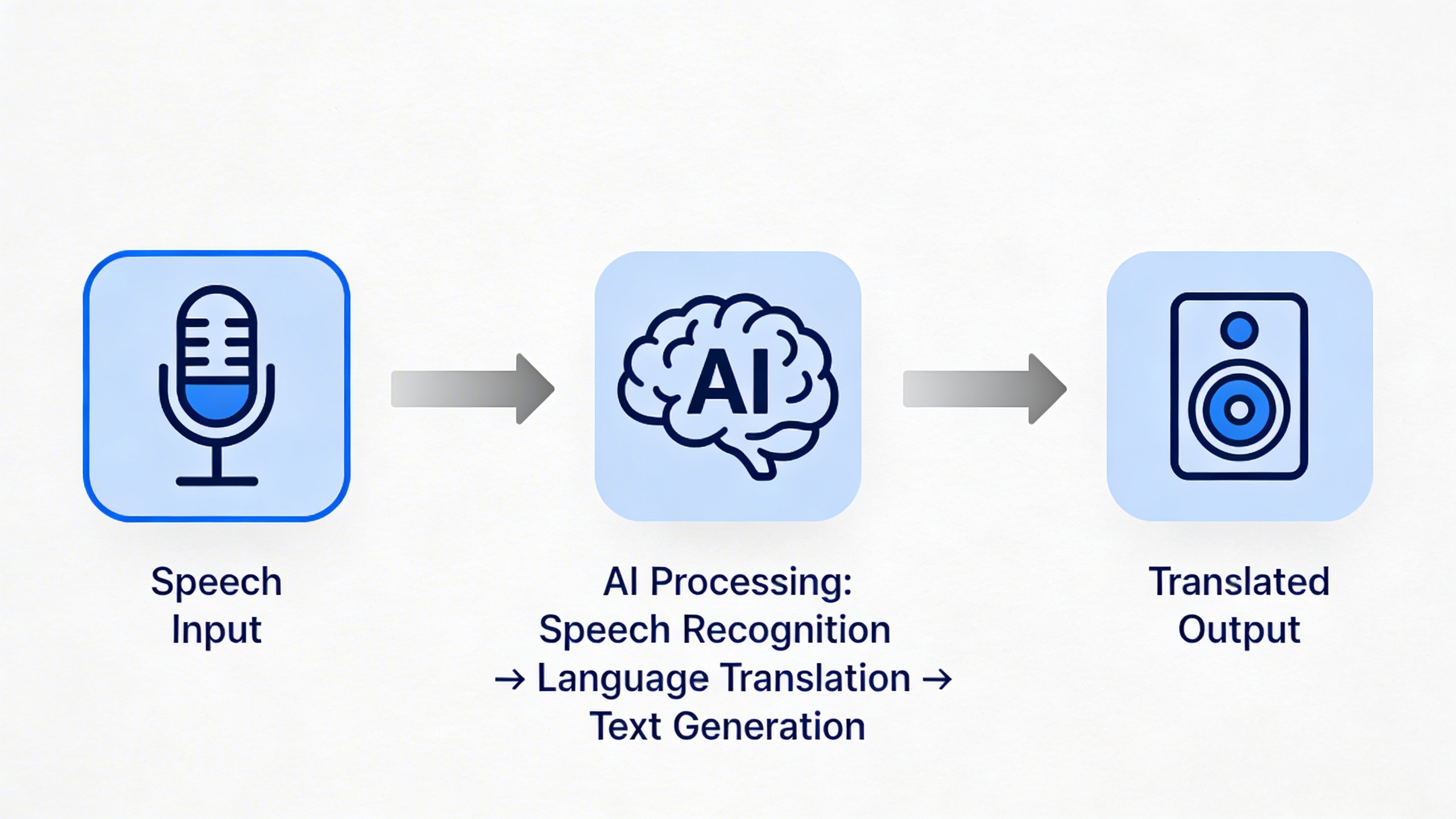
The process of translating voice involves three distinct but interconnected stages that happen in rapid succession. Modern systems can complete this entire pipeline in under two seconds, enabling natural conversations between speakers of different languages.
Speech Recognition and Processing
The journey begins when you translate voice through automatic speech recognition (ASR) technology. This system converts acoustic sound waves into digital text by analyzing speech patterns, phonemes, and linguistic structures. Advanced ASR engines use deep learning models trained on millions of hours of human speech across different accents, speaking speeds, and audio conditions.
During the recognition phase, the system breaks down your spoken words into smaller components called tokens. These algorithms account for background noise, speaker variations, and even incomplete sentences that occur in natural conversation. The quality of this initial step directly impacts the final translation accuracy, as errors in speech recognition compound through the remaining stages.
Modern voice translation platforms employ sophisticated noise reduction and audio enhancement techniques to improve recognition accuracy. They can distinguish between multiple speakers, handle overlapping speech, and adapt to individual vocal characteristics over time. Some systems even learn from user corrections to improve future performance.
Neural Machine Translation
Once the system converts speech to text, neural machine translation (NMT) models take over to translate speech to english or other target languages. These models use transformer architectures and attention mechanisms to understand context, idioms, and nuanced meaning rather than simply replacing words with dictionary equivalents.
NMT systems analyze entire sentences or paragraphs simultaneously, considering grammatical structures, cultural context, and semantic relationships. This approach produces more natural-sounding translations compared to older phrase-based methods. The models continuously learn from vast datasets containing billions of translated sentence pairs across multiple domains and industries.
The translation quality depends heavily on the training data quality and the specific language pair being processed. Popular language combinations like Spanish to English typically achieve higher accuracy than less common pairs due to more extensive training datasets. Professional applications often require specialized models trained on domain-specific terminology for medical, legal, or technical content.
Text-to-Speech Synthesis
The final stage converts translated text into natural-sounding speech through text-to-speech (TTS) synthesis. Modern TTS systems use neural networks to generate human-like voices with appropriate intonation, emphasis, and emotional expression. These systems can produce speech that closely mimics natural human pronunciation patterns.
Advanced TTS engines offer multiple voice options, including different genders, ages, and regional accents. Some platforms allow users to adjust speaking speed and voice characteristics to match their preferences or specific use cases. The synthesis process considers punctuation, sentence structure, and context to determine appropriate pauses and emphasis.
Real-time voice translate to english applications must balance synthesis quality with processing speed. While offline systems can take several seconds to generate perfect pronunciation, live conversation tools prioritize rapid response times while maintaining acceptable audio quality.
The entire pipeline from speech input to translated audio output typically completes within 1-3 seconds for real-time applications. However, processing time varies based on sentence length, language complexity, network connectivity, and the computational resources available. Cloud-based systems generally offer superior accuracy but require stable internet connections, while offline solutions provide privacy and reliability at the cost of some translation quality.
Understanding these technical foundations helps users evaluate different voice translation tools and set realistic expectations for accuracy and performance in various scenarios.
Top Voice Translation Services Compared
The voice translation market offers diverse solutions tailored to different user needs and environments. Understanding how these services compare across key metrics helps you select the right tool to translate voice content effectively for your specific requirements.
Enterprise-Grade Solutions
Enterprise voice translation platforms prioritize accuracy, security, and seamless integration with existing business systems. Microsoft Translator leads this segment with its robust API that enables organizations to translate speech to English and 70+ other languages with enterprise-level reliability.
| Service | Supported Languages | Accuracy Rate | Integration Options | Starting Price |
|---|---|---|---|---|
| Microsoft Translator | 70+ | 95% | REST API, SDKs, Teams | $10/million characters |
| Google Cloud Translation | 100+ | 94% | REST API, AutoML, Cloud Functions | $20/million characters |
| AWS Translate | 75+ | 93% | API Gateway, Lambda, S3 | $15/million characters |
These enterprise solutions excel at handling large volumes of voice translation requests while maintaining consistent quality. Google Cloud Translation offers the broadest language support, making it ideal for multinational corporations that need to voice translate to English from diverse source languages. The platform’s AutoML capabilities allow businesses to train custom models for industry-specific terminology.
Amazon Web Services Translate integrates seamlessly with other AWS services, enabling organizations to build comprehensive voice processing workflows. Companies often combine AWS Transcribe with Translate to create end-to-end solutions that convert speech to text, then translate using voice processing pipelines.
Consumer-Friendly Applications
Consumer applications focus on ease of use and immediate accessibility for everyday voice translation needs. These tools make it simple for individuals to translate voice content without technical expertise or complex setup procedures.
Google Translate’s mobile app remains the most widely adopted consumer solution, offering real-time conversation mode that can translate speech to English and back again seamlessly. The app’s camera integration allows users to translate text and voice simultaneously, creating a comprehensive translation experience.
iTranslate Voice specializes exclusively in voice translation, providing optimized algorithms that deliver faster processing times compared to general-purpose translation apps. Users can speak naturally and receive immediate translations, making it particularly effective for travel and casual conversations.
For professionals who frequently need to translate voice recordings or conduct multilingual meetings, tools like Sozai combine transcription accuracy with translation capabilities, enabling users to capture spoken content and convert it across languages while maintaining speaker identification and formatting.
SayHi Translate focuses on conversation flow, automatically detecting when speakers switch languages and adjusting the voice translate to English direction accordingly. This creates more natural dialogue experiences compared to manual language switching.
Specialized Industry Tools
Certain industries require voice translation solutions with specialized features that address unique workflow requirements and compliance standards.
Medical interpretation platforms like Martti and Canopy Speak prioritize accuracy for healthcare terminology while ensuring HIPAA compliance. These services train their voice translation models on medical vocabularies, achieving higher precision when healthcare providers need to translate speech to English from patients speaking other languages.
Legal interpretation services such as Interprefy provide certified translation quality with audit trails and session recording capabilities. Law firms and courts rely on these platforms when they need to translate voice content during depositions, hearings, and client consultations with guaranteed accuracy standards.
Educational technology platforms integrate voice translation directly into learning management systems. Blackboard Collaborate and Zoom’s translation features enable instructors to reach international students by providing real-time voice translate to English capabilities during lectures and discussions.
The hospitality industry benefits from specialized solutions like Quicktalk and Jeenie, which focus on common service scenarios. Hotel staff can use these tools to translate using voice commands for check-in procedures, restaurant orders, and guest assistance without interrupting service flow.
Manufacturing and logistics companies often deploy ruggedized voice translation devices that work in noisy environments. These specialized tools filter background noise while maintaining translation accuracy, enabling international teams to communicate effectively on factory floors and warehouse operations.
When selecting voice translation services, consider your specific accuracy requirements, integration needs, and budget constraints. Enterprise solutions offer the most robust features but require technical implementation, while consumer apps provide immediate usability with some limitations on customization and advanced features.
Key Features to Look For
When evaluating voice translation tools, certain features distinguish professional-grade solutions from basic alternatives. Understanding these capabilities helps you select a platform that meets your specific translation needs, whether for business meetings, travel, or educational purposes.
Real-Time Translation Speed
Translation latency directly impacts conversation flow and user experience. The best voice translation services process speech within 2-3 seconds, allowing natural dialogue to continue without awkward pauses. This speed requirement becomes critical during live presentations or customer service interactions where delays disrupt communication.
Streaming translation technology offers superior performance compared to batch processing. Instead of waiting for complete sentences, advanced systems begin translating as you speak, reducing overall latency. When you need to translate voice input during time-sensitive scenarios, look for platforms that specify their processing speeds and offer streaming capabilities.
Network connectivity affects translation speed significantly. Services that rely entirely on cloud processing may struggle with poor internet connections, while hybrid solutions maintain functionality through local processing combined with cloud enhancement when available.
Language Support and Accuracy
Comprehensive language coverage extends beyond major languages to include regional dialects and variations. Quality voice translation platforms recognize that English itself has numerous variations—British, American, Australian, and Indian English each present unique pronunciation patterns and vocabulary differences.
Dialect recognition capabilities determine whether a service can accurately translate speech to English from speakers with diverse accents. Advanced systems train on varied speech patterns, ensuring consistent performance regardless of the speaker’s regional background or speaking style.
Accuracy rates vary significantly across language pairs. While Spanish-to-English translation typically achieves 90-95% accuracy, less common language combinations may perform at 70-80% accuracy levels. Professional applications require platforms that provide transparency about their accuracy metrics for specific language pairs.
Context awareness improves translation quality substantially. Systems that understand domain-specific terminology—medical, legal, or technical vocabulary—deliver more precise results than general-purpose translators when you translate using voice in specialized fields.
Device Compatibility and Integration
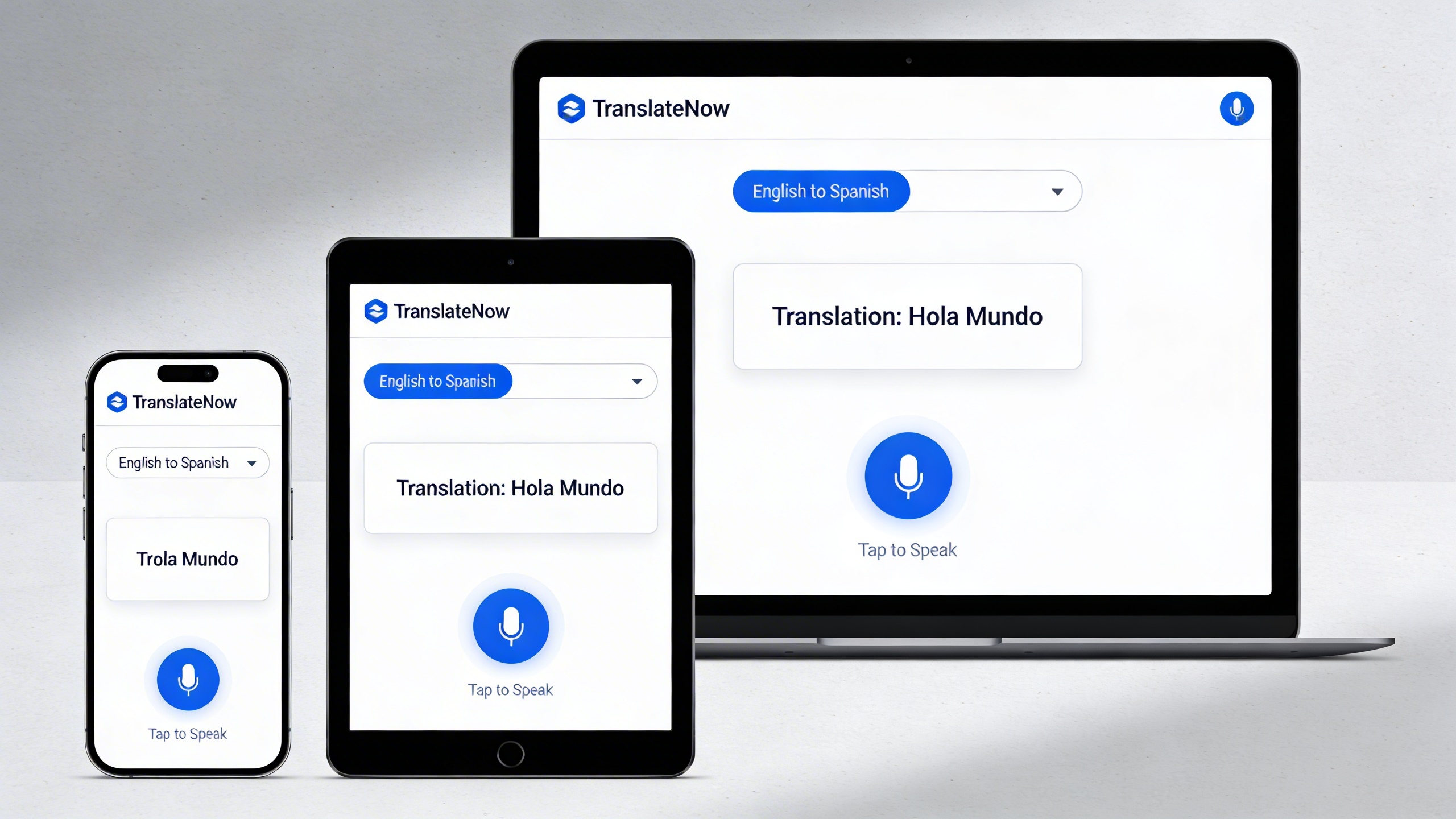
Cross-platform availability ensures consistent access across your devices. The most versatile voice translate to English solutions work seamlessly on smartphones, tablets, desktop computers, and smart speakers, synchronizing preferences and translation history across platforms.
Mobile performance optimization becomes essential for on-the-go translation needs. Battery efficiency, background processing capabilities, and offline functionality determine whether a mobile app remains practical during extended use or international travel where power sources are limited.
API availability enables custom integrations for businesses requiring voice translation within existing applications. Robust APIs support real-time streaming, batch processing, and webhook notifications, allowing developers to embed translation capabilities into customer service platforms, educational software, or communication tools.
Offline capabilities provide crucial backup functionality when internet access becomes unreliable. While offline translation typically offers reduced accuracy compared to cloud-based processing, having local translation capabilities ensures continuity during network outages or in remote locations.
Integration with productivity tools enhances workflow efficiency. Platforms that connect with meeting software, note-taking applications, or customer relationship management systems streamline documentation and follow-up processes. For users who frequently need to translate voice recordings into written English, seamless export options to popular document formats prove invaluable.
Hardware compatibility considerations include microphone sensitivity, noise cancellation support, and audio input quality requirements. Professional environments may require integration with conference room systems or specialized recording equipment.
Use Cases and Applications
Voice translation technology has transformed how we communicate across language barriers, offering practical solutions for diverse scenarios where instant speech conversion is essential. Understanding these applications helps you choose the right tool for your specific needs and maximize the benefits of real-time language translation.
Business and Professional Settings
Modern businesses increasingly rely on voice translation tools to facilitate global communication and collaboration. Meeting transcription has become particularly valuable, allowing teams to automatically translate speech to English during international video conferences and capture accurate records of multilingual discussions. Professional services use these tools to translate voice communications with international clients, ensuring nothing gets lost in translation during critical negotiations or project planning sessions.
Customer service departments leverage voice translation to support diverse customer bases without requiring multilingual staff. Representatives can translate using voice technology to understand customer inquiries in real-time and respond appropriately, significantly improving service quality and customer satisfaction. This application proves especially valuable for companies expanding into new markets where language barriers might otherwise limit their reach.
International conferences and business events benefit tremendously from real-time voice translation services. Attendees can voice translate to English instantly during presentations, panel discussions, and networking sessions, making global events more accessible and productive for participants from different linguistic backgrounds.
Travel and Tourism
Travelers find voice translation indispensable for navigating foreign countries where English isn’t widely spoken. These tools enable tourists to translate voice communications with locals, from asking for directions to ordering meals at restaurants. The technology proves particularly useful in emergency situations where quick, accurate communication can be crucial for safety and assistance.
Tourism professionals use voice translation to enhance visitor experiences, allowing tour guides and hospitality staff to communicate effectively with international guests. Hotels, restaurants, and tourist attractions employ these tools to break down language barriers and provide superior service to visitors from around the world.
Education and Learning
Educational institutions utilize voice translation technology to support international students and facilitate cross-cultural learning experiences. Students can translate speech to English during lectures, seminars, and group discussions, ensuring they don’t miss important information due to language barriers. This accessibility feature has made higher education more inclusive for non-native English speakers.
Language learning applications incorporate voice translation as both a learning aid and assessment tool. Students practice speaking in their target language while receiving immediate translation feedback, accelerating their comprehension and pronunciation skills. Teachers use these tools to provide real-time support during language immersion activities and to help students understand complex concepts explained in their non-native language.
For note-taking and study purposes, tools like Sozai enable students to capture and translate spoken content from lectures or study groups, creating comprehensive study materials that bridge language gaps. This functionality proves especially valuable in international academic programs where course content may be delivered in multiple languages.
The accessibility benefits extend beyond traditional education, supporting individuals with hearing impairments who rely on voice translation tools to convert spoken content into readable text, making educational content and professional communications more accessible across diverse learning needs.
Accuracy and Quality Considerations
When you translate voice to english using real-time tools, accuracy becomes paramount for effective communication. Understanding the factors that influence translation quality helps you choose the right service and optimize your results for different scenarios.
Factors Affecting Translation Quality
Accent recognition represents one of the most significant challenges in voice translation technology. Modern systems perform exceptionally well with standard pronunciations but may struggle with heavy regional accents or non-native speaker patterns. Background noise handling varies dramatically between platforms—while some excel in quiet environments, others incorporate advanced noise cancellation that allows you to translate speech to english even in bustling cafes or conference rooms.
Context understanding separates good translation tools from exceptional ones. The best voice translation services analyze surrounding sentences to disambiguate words that sound similar but have different meanings. For instance, distinguishing between “right” (direction) and “write” (action) requires contextual awareness that basic systems often lack.
Technical terminology poses another hurdle when you voice translate to english. Medical professionals, engineers, and legal experts need systems trained on specialized vocabularies. Generic translation tools may misinterpret industry-specific terms, leading to potentially serious miscommunications in professional settings.
Testing and Evaluation Methods
Effective evaluation requires systematic testing across multiple scenarios. Start by recording sample conversations in your target languages using different speakers with varying accents. Test each platform’s ability to translate using voice in both quiet and noisy environments, measuring accuracy percentages for different types of content.
Create evaluation criteria that match your specific needs. Business users should test formal presentation language, while travelers might focus on casual conversation and emergency phrases. Document which services perform best for your particular accent patterns and speaking style.
Improving Results
Several practical strategies can significantly enhance your voice translation accuracy. Speaking clearly and at a moderate pace gives the system more time to process audio input and apply contextual analysis. Positioning yourself appropriately relative to your device’s microphone—typically 6-12 inches away—optimizes audio capture quality.
User training plays a crucial role in achieving better results. Familiarize yourself with your chosen platform’s specific commands and supported languages. Some systems allow you to add custom vocabulary or train on your speaking patterns, dramatically improving recognition accuracy over time.
Environmental optimization matters equally. Choose quieter locations when possible, or invest in directional microphones that reduce background interference. For important conversations, consider using dedicated transcription tools like Sozai to capture accurate voice-to-text records that can supplement real-time translation efforts.
Implementation and Setup Guide
Getting Started with Voice Translation
Setting up voice translation tools requires careful attention to hardware specifications and initial configuration. Most modern smartphones and computers can handle basic voice translation tasks, but optimal performance demands specific requirements. Your device should have at least 4GB of RAM and a dual-core processor to translate voice smoothly without lag or interruptions.
Microphone quality significantly impacts translation accuracy when you translate speech to English. Built-in device microphones work for casual use, but external USB microphones or wireless headsets deliver superior results. Position your microphone 6-8 inches from your mouth and test audio levels before important conversations. Background noise reduction features help maintain clarity when you voice translate to english in crowded environments.
Optimization Best Practices
Network stability forms the foundation of reliable voice translation performance. Ensure your internet connection maintains consistent speeds above 5 Mbps for real-time processing. Many translation services cache common phrases locally, but complex sentences require cloud processing to translate using voice effectively.
User training accelerates adaptation to voice translation workflows. Practice speaking clearly at a moderate pace, allowing brief pauses between sentences. Train yourself to articulate consonants distinctly and avoid overlapping speech when multiple people participate in conversations. Regular practice sessions improve both your speaking technique and familiarity with translation interface controls.
Configure language detection settings based on your typical use cases. Some tools automatically detect source languages, while others require manual selection for optimal accuracy. Customize vocabulary lists with industry-specific terms or proper nouns that appear frequently in your conversations.
Troubleshooting Common Issues
Audio input problems represent the most frequent voice translation challenges. Check microphone permissions in your device settings and verify that translation apps have access to audio recording. Restart applications if voice recognition becomes unresponsive, and clear app cache data to resolve persistent glitches.
Translation delays often indicate network connectivity issues or server overload. Switch to offline mode when available, or try alternative servers during peak usage periods. Monitor translation quality by comparing results across different tools—inconsistent output suggests either poor audio input or service limitations.
Performance monitoring helps identify patterns in translation accuracy. Keep notes about challenging phrases or accents that consistently produce errors. Most professional translation platforms provide usage analytics and error reports to help optimize your voice translation setup over time.
Future of Voice Translation Technology
The landscape of voice translation technology is rapidly evolving, with breakthrough innovations promising to transform how we communicate across language barriers. As neural networks become more sophisticated and computing power advances, the ability to translate voice with unprecedented accuracy is becoming a reality for businesses and individuals worldwide.
Emerging Trends and Innovations
Neural network architectures are revolutionizing voice translation capabilities through transformer models that understand context and nuance better than ever before. These advances enable systems to translate speech to English while preserving emotional tone, cultural idioms, and speaker intent. Edge computing is bringing processing power directly to devices, allowing real-time translation without internet connectivity and reducing latency to near-instantaneous levels.
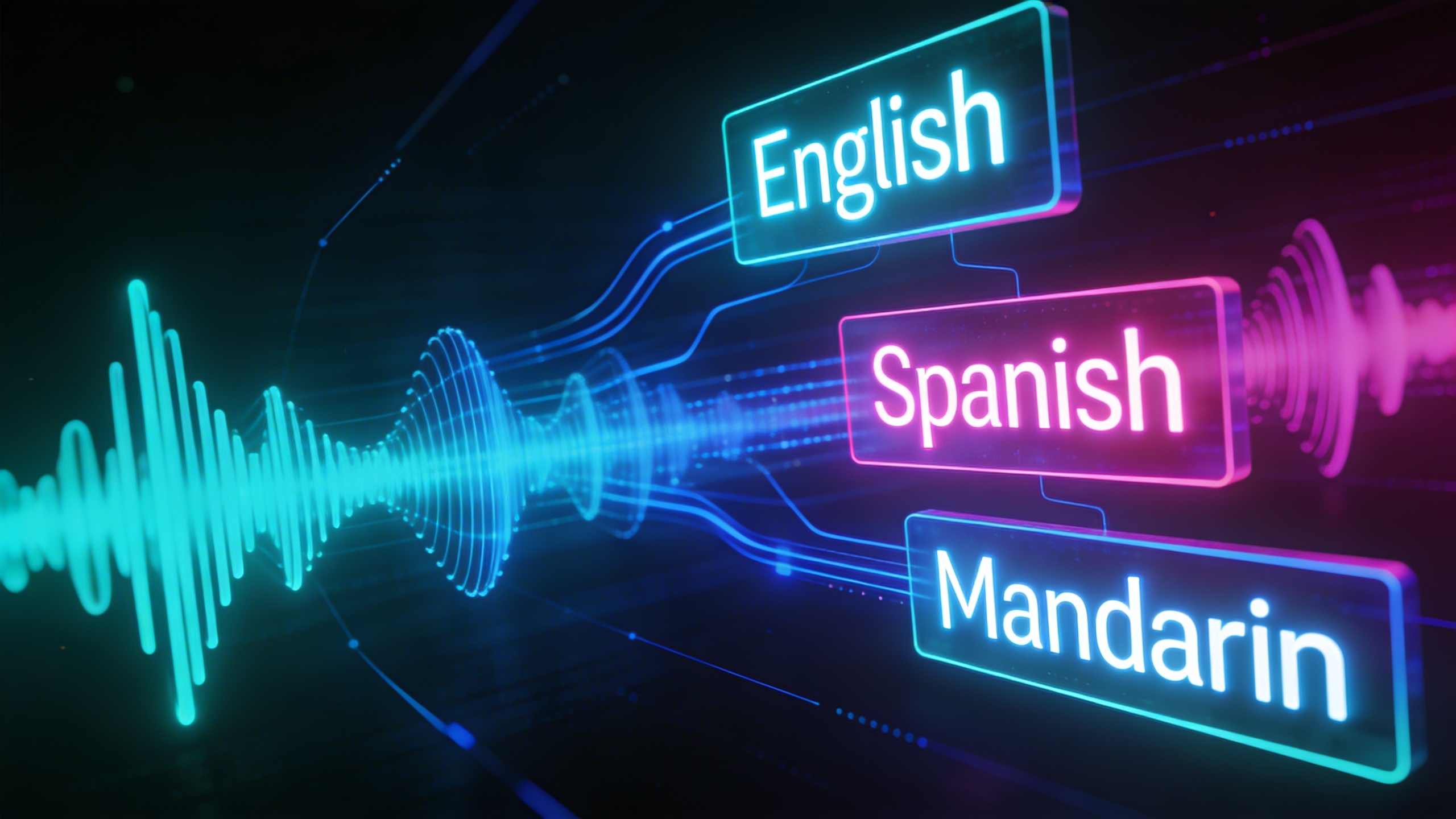
Multilingual conversation support is emerging as a game-changing feature, where multiple speakers can communicate simultaneously in different languages. Advanced systems now maintain conversation flow while tracking individual speakers, making group discussions seamless regardless of language barriers.
Integration with AI Assistants
Voice translation technology is becoming deeply integrated with AI assistants, creating unified platforms that can voice translate to English while performing other tasks. This convergence allows users to translate using voice commands naturally within their existing workflows, whether scheduling meetings, taking notes, or conducting research.
Smart home devices and mobile assistants are incorporating translation capabilities, making cross-language communication as simple as asking for weather updates. These integrations are particularly valuable for international businesses and multicultural households.
Privacy and Security Developments
Data protection concerns are driving innovation in privacy-preserving translation technologies. On-device processing eliminates the need to send sensitive conversations to cloud servers, while federated learning approaches allow systems to improve without compromising user privacy.
Enterprise-grade security features are becoming standard, including end-to-end encryption for voice data and compliance with international privacy regulations. Industry adoption is accelerating as organizations recognize the strategic value of secure, real-time translation capabilities for global operations, customer service, and cross-border collaboration.
These technological advances are positioning voice translation as an essential tool for breaking down communication barriers in our increasingly connected world.