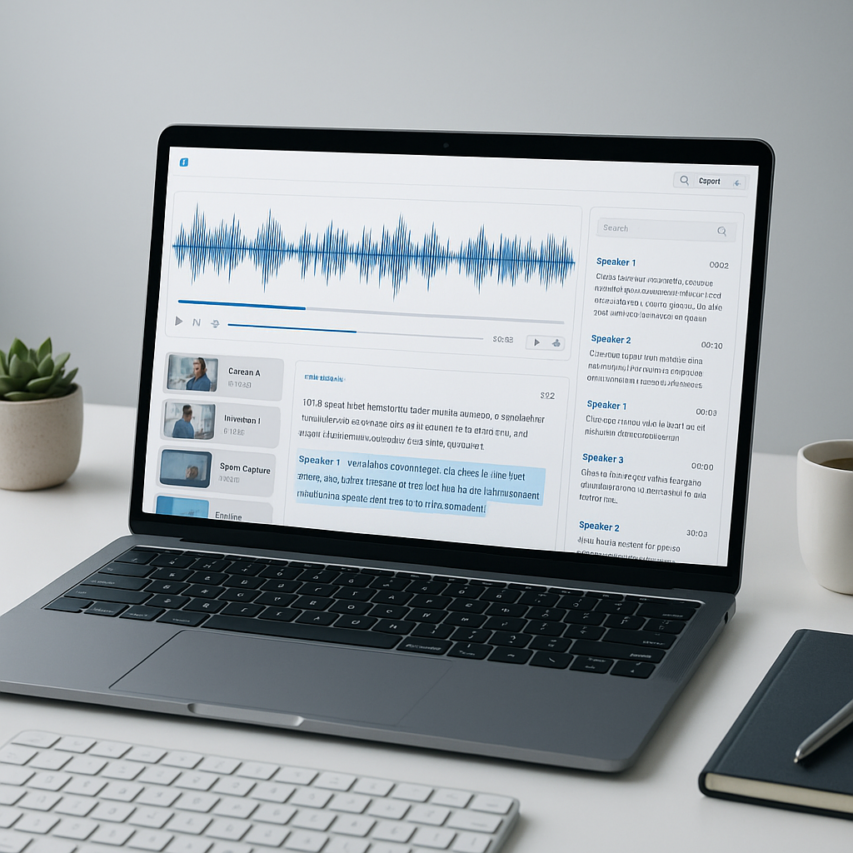
Video content has exploded across every industry, from marketing campaigns and educational courses to corporate meetings and social media. As this visual medium continues to dominate digital communication, the ability to transcribe video content into searchable, accessible text has become essential for content creators, businesses, and organizations worldwide. Video transcription transforms spoken words into written format, making content discoverable through search engines, accessible to hearing-impaired audiences, and easier to repurpose across multiple channels.
The right video transcription services can dramatically streamline your workflow while expanding your content’s reach and impact. Whether you need to create captions for social media videos, generate meeting transcripts for team collaboration, or ensure compliance with accessibility regulations, modern transcription tools offer powerful solutions that save countless hours of manual work. Advanced AI transcribe technology now delivers accuracy rates that rival human transcribers at a fraction of the cost and time investment.
This comprehensive guide explores the landscape of video transcription options available today, from automated AI-powered platforms to professional human services. You’ll discover the essential features that separate excellent transcription tools from mediocre ones, compare top-rated services across different use cases, and learn proven strategies to maximize transcription accuracy and efficiency for your specific needs.
What Are Video Transcription Services and Why You Need Them
Video transcription is the process of converting spoken content from video files into written text, creating searchable, accessible documents that capture every word, pause, and speaker identification. Modern video transcription services leverage advanced artificial intelligence algorithms alongside human expertise to deliver accurate text versions of your multimedia content, whether you’re working with recorded meetings, educational lectures, marketing videos, or podcast episodes.
The demand for reliable ways to transcribe video content has exploded as businesses recognize the strategic value of making their multimedia assets searchable and accessible. From improving SEO rankings to meeting legal compliance requirements, video transcription services have evolved from a nice-to-have feature into an essential business tool.
Understanding Video Transcription Technology
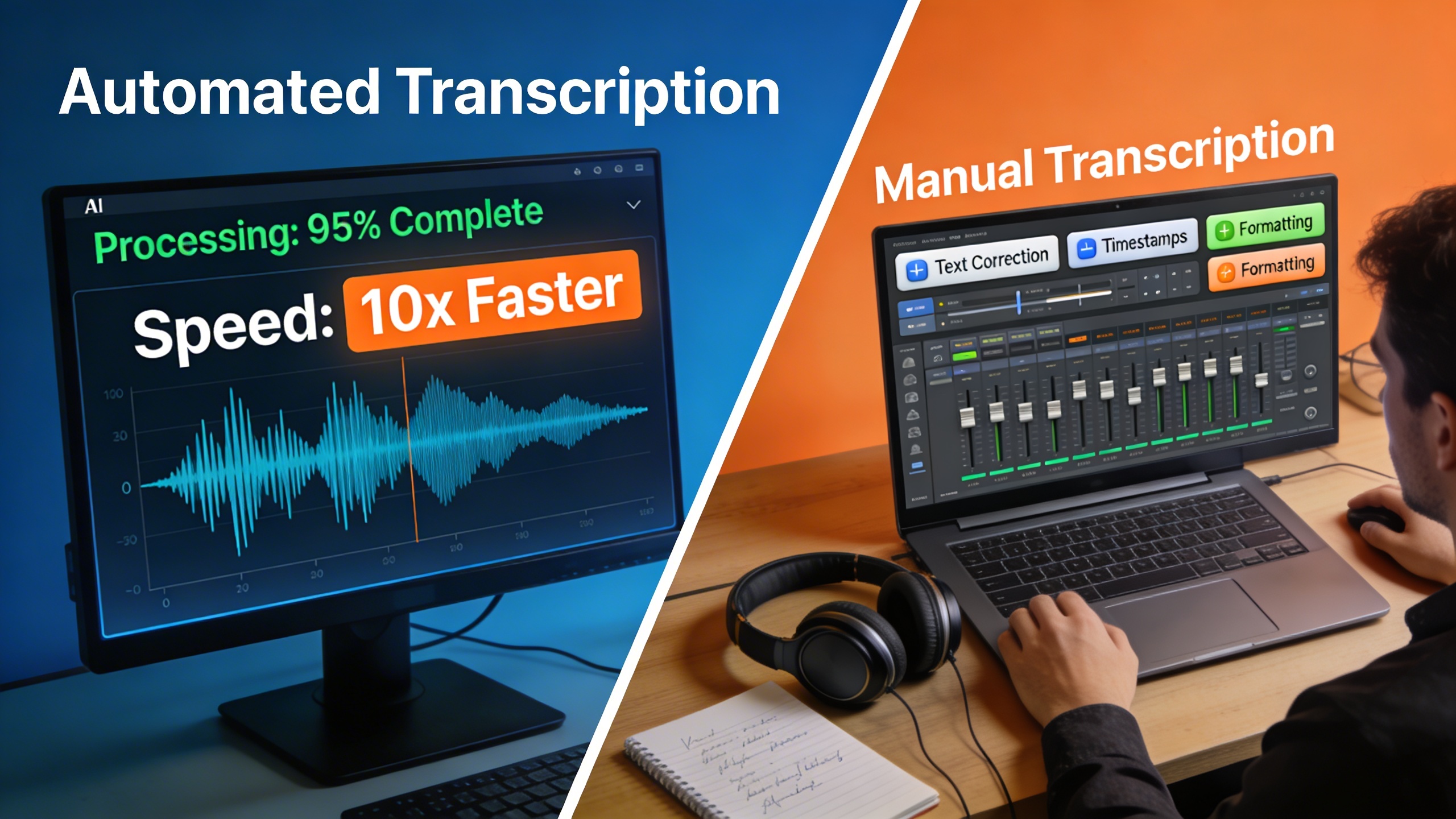
Today’s video transcription landscape offers two primary approaches: AI-powered automated transcription and human-based manual transcription. AI transcribe technology uses machine learning models trained on vast datasets of speech patterns, accents, and linguistic variations to convert audio into text in real-time or near real-time processing.
Automated transcription tools typically achieve accuracy rates between 85-95% for clear audio with minimal background noise. These systems excel at processing standard speech patterns and common vocabulary but may struggle with technical jargon, heavy accents, or poor audio quality. The speed advantage is significant—most AI systems can transcribe an hour of video content in just a few minutes.
Human transcription services, while slower and more expensive, deliver accuracy rates of 98-99% and provide context-aware editing that captures nuanced meaning, speaker emotions, and complex terminology. Professional transcriptionists can identify multiple speakers, add appropriate punctuation, and format the output according to specific style guidelines.
Hybrid approaches combine both technologies, using AI for initial processing followed by human review and editing. This method balances speed, accuracy, and cost-effectiveness for many business applications.
Key Benefits for Content Creators and Businesses
The return on investment for video transcription services extends far beyond simple text conversion. Content creators who transcribe video materials see measurable improvements in search engine visibility, as search algorithms can index and rank text content more effectively than video files alone.
Educational institutions report significant learning outcome improvements when students have access to searchable transcripts alongside video lectures. Students can quickly locate specific topics, review complex concepts, and study more efficiently using text-based materials.
Marketing teams leverage video transcription services to repurpose single video assets into multiple content formats. A recorded webinar can become blog posts, social media quotes, email newsletter content, and downloadable guides—multiplying the value of original video production investments.
For businesses conducting frequent video conferences or client presentations, having searchable transcripts enables teams to quickly locate discussed action items, decisions, and key insights without rewatching entire recordings. This capability transforms video archives from static storage into dynamic knowledge repositories.
Accessibility and Legal Compliance Requirements
The Americans with Disabilities Act (ADA) requires many organizations to provide accessible alternatives to audio and video content, making video transcription services essential for legal compliance. Educational institutions, government agencies, and businesses serving the public must ensure their multimedia content includes accurate captions or transcripts.
Beyond ADA requirements, the Web Content Accessibility Guidelines (WCAG) 2.1 establish international standards for digital accessibility. Organizations following these guidelines demonstrate commitment to inclusive design while avoiding potential legal challenges related to accessibility discrimination.
Accurate transcription tools help businesses meet these compliance requirements efficiently. Rather than manually creating captions for every video, automated systems can generate initial transcripts that human editors can refine to meet accessibility standards.
The compliance benefits extend to internal communications as well. Companies with remote teams often record meetings and training sessions, and providing transcripts ensures all employees can access important information regardless of hearing abilities or language preferences.
Modern transcription tools like Sozai streamline this process by offering real-time transcription capabilities that can capture meeting discussions as they happen, creating immediate accessibility while building searchable archives for future reference.
Types of Video Transcription Services Available
Understanding the different types of video transcription services helps you choose the right solution for your specific needs and budget. Each approach offers distinct advantages depending on your priorities for speed, accuracy, and cost-effectiveness.
AI-Powered Automatic Transcription
AI transcribe technology has revolutionized how quickly we can convert video to text. These automated transcription tools use advanced machine learning algorithms to process audio in real-time or near real-time, delivering results within minutes rather than hours.
The primary advantage of AI-powered video transcription lies in its speed and cost-effectiveness. Most services can transcribe a one-hour video in under 10 minutes at a fraction of the cost of human transcription. Popular platforms like Otter.ai, Rev’s automated service, and Sozai offer accurate AI transcription with user-friendly interfaces that make it easy to transcribe video content on demand.
However, AI transcription works best with clear audio, minimal background noise, and standard accents. Technical jargon, multiple speakers, or poor audio quality can reduce accuracy rates from 95% to 80% or lower. These tools excel for content creators, students recording lectures, or businesses needing quick meeting transcripts where minor errors are acceptable.
Human Professional Transcription
Professional human transcription services deliver the highest accuracy rates, typically achieving 99% precision even with challenging audio conditions. Human transcribers can distinguish between similar-sounding words, identify speakers accurately, and understand context that AI might miss.
This approach costs significantly more than automated options, usually ranging from $1.50 to $4.00 per audio minute compared to $0.10 to $0.25 for AI services. Turnaround times typically span 24 to 72 hours, making human transcription ideal for legal proceedings, medical documentation, academic research, or any scenario where absolute accuracy is non-negotiable.
Professional video transcription services often include additional formatting, speaker identification, and timestamp precision that automated tools might struggle to provide consistently. Companies like Rev, TranscribeMe, and GoTranscript offer human transcription with various quality tiers and specialization options.
Hybrid AI-Human Solutions
Hybrid transcription combines the speed of AI with human oversight for quality assurance. These video transcription services use automated tools for initial processing, then human editors review and correct the output before delivery.
This approach offers a compelling middle ground, delivering accuracy rates of 97-99% while maintaining faster turnaround times than pure human transcription. Costs typically fall between automated and fully human services, making hybrid solutions attractive for businesses that need reliable accuracy without the premium price tag.
Hybrid services work particularly well for podcast transcription, webinar documentation, and educational content where accuracy matters but perfect precision isn’t legally required. The AI handles the bulk transcription work while humans focus on correcting technical terms, proper nouns, and contextual nuances that automated systems commonly miss.
When choosing between these transcription tools, consider your specific requirements for accuracy, budget constraints, and timeline needs. Content creators might prioritize speed and cost-effectiveness with AI solutions, while legal professionals require the precision that only human transcription can guarantee. Many organizations find success using different service types for different content categories, leveraging each approach’s strengths for optimal results.
Essential Features to Look for in Video Transcription Tools
Selecting the right video transcription tool requires careful evaluation of several critical features that directly impact your workflow efficiency and output quality. The best transcription tools combine cutting-edge technology with user-friendly interfaces, ensuring that whether you’re processing a single interview or hundreds of training videos, your chosen solution delivers consistent, reliable results.
Accuracy and Quality Standards
The foundation of any effective video transcription service lies in its accuracy rates. Industry-leading platforms typically achieve 85-95% accuracy for clear audio recordings, with premium services reaching up to 99% accuracy under optimal conditions. When evaluating transcription tools, look for providers that transparently share their accuracy benchmarks and testing methodologies.
Modern AI transcribe technology has revolutionized accuracy standards by incorporating advanced machine learning algorithms that continuously improve through exposure to diverse audio samples. The most sophisticated systems can distinguish between multiple speakers, handle various accents and dialects, and adapt to industry-specific terminology. Professional-grade tools often include confidence scoring, which indicates the system’s certainty level for each transcribed word or phrase.
Quality standards extend beyond mere word recognition. Speaker identification capabilities allow tools to automatically detect and label different voices in your video content, which proves invaluable for interviews, meetings, and panel discussions. Additionally, timestamp accuracy ensures that your transcribed text aligns perfectly with specific moments in your video, enabling precise navigation and reference.
For users who frequently work with specialized content, consider tools that offer custom vocabulary training. This feature allows the system to learn industry-specific terms, proper nouns, and technical jargon that might otherwise be misinterpreted during the transcription process.
File Format Support and Integration Options
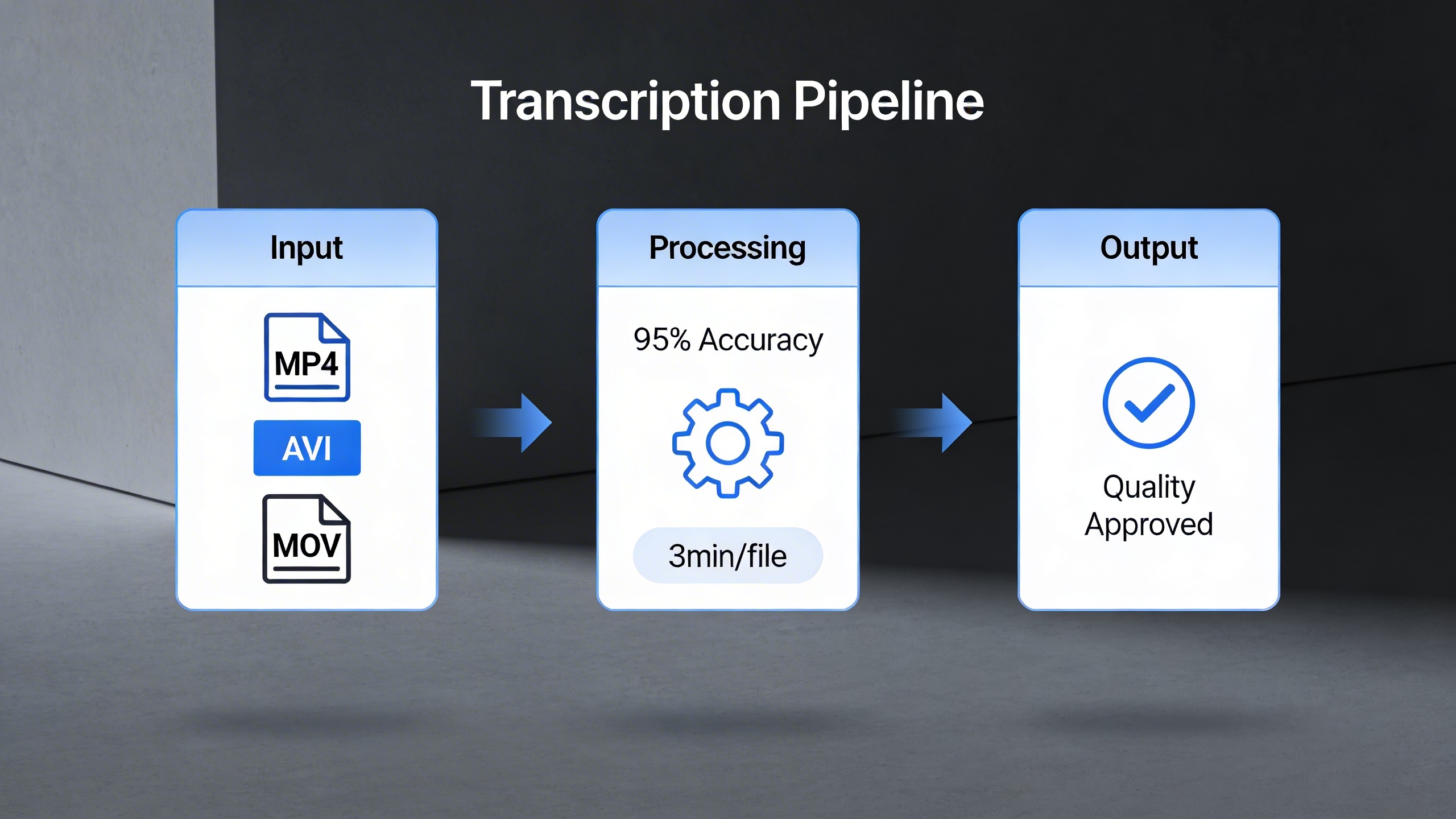
Comprehensive file format support determines how seamlessly you can integrate video transcription into your existing workflow. Leading transcription tools accept a wide range of video formats including MP4, AVI, MOV, WMV, and MKV, along with audio formats like MP3, WAV, and FLAC. This flexibility eliminates the need for time-consuming format conversions before processing your content.
Cloud-based video transcription services often provide the most extensive format support, as they can leverage powerful server-side processing capabilities to handle large files and complex formats. When you transcribe video content regularly, look for platforms that support batch processing, allowing you to upload multiple files simultaneously for efficient processing.
Integration capabilities significantly impact your productivity. The most valuable transcription tools offer direct connections to popular platforms like Google Drive, Dropbox, YouTube, Vimeo, and Zoom. These integrations enable automatic file retrieval and seamless workflow management without manual file transfers.
| Integration Type | Benefits | Common Platforms |
|---|---|---|
| Cloud Storage | Automatic sync, backup protection | Google Drive, Dropbox, OneDrive |
| Video Platforms | Direct import, metadata preservation | YouTube, Vimeo, Wistia |
| Communication Tools | Meeting transcription, real-time processing | Zoom, Teams, Slack |
API availability represents another crucial integration feature. Organizations with custom workflows or enterprise requirements benefit from robust APIs that enable seamless incorporation of video transcription capabilities into existing systems and applications.
Security and Privacy Protections
Security considerations become paramount when dealing with sensitive video content, particularly in legal, medical, or corporate environments. End-to-end encryption should be standard for any professional video transcription service, protecting your content during upload, processing, and storage phases.
Compliance certifications provide additional assurance for organizations operating under strict regulatory requirements. Look for transcription tools that maintain SOC 2 Type II compliance, GDPR adherence, and industry-specific certifications like HIPAA for healthcare content or FERPA for educational materials.
Data retention policies deserve careful examination. The most security-conscious platforms offer configurable retention settings, allowing you to automatically delete processed files after specified periods. Some services provide zero-retention options, where your content is processed and immediately purged from their servers, ensuring maximum privacy protection.
Geographic data processing controls enable organizations to maintain compliance with local regulations. Premium video transcription services often allow users to specify processing regions, ensuring that sensitive content remains within approved jurisdictions throughout the transcription workflow.
Two-factor authentication, role-based access controls, and detailed audit logs round out comprehensive security packages, providing enterprise-grade protection for organizations handling confidential video content across multiple team members and departments.

Top Video Transcription Services Compared
Choosing the right video transcription service depends on your specific needs, budget, and accuracy requirements. The market offers diverse solutions ranging from AI-powered platforms that deliver results in minutes to professional human services that guarantee precision for critical content. Understanding how these services compare across key metrics will help you make an informed decision for your video transcription needs.
Leading AI Transcription Platforms
AI-powered transcription tools have revolutionized how we convert video to text, offering speed and affordability that traditional methods cannot match. These platforms use advanced speech recognition technology to process audio from video files and generate text transcripts automatically.
| Service | Accuracy Rate | Pricing Model | Key Features | Best For |
|---|---|---|---|---|
| Otter.ai | 85-95% | $0.085/minute | Live transcription, speaker identification, collaboration tools | Meetings and interviews |
| Rev AI | 80-90% | $0.02/minute | Custom vocabulary, multiple formats, API integration | Content creators and developers |
| Trint | 85-92% | $0.25/minute | Interactive editor, translation, collaboration | Media professionals |
| Descript | 88-94% | $12/month for 10 hours | Video editing integration, overdub feature | Podcasters and video editors |
Most AI transcription platforms excel with clear audio and standard accents but may struggle with technical jargon, multiple speakers, or poor audio quality. When you need to transcribe video content regularly, these services offer excellent value through subscription models that reduce per-minute costs significantly.
For mobile professionals who frequently record meetings or interviews, Sozai provides seamless AI transcription across iOS, Android, and macOS devices, making it easy to capture and convert spoken content to text on the go.
Professional Human Transcription Services
Human transcription services deliver superior accuracy for complex content, specialized terminology, and challenging audio conditions. These services employ trained transcriptionists who can handle nuanced speech patterns, technical vocabulary, and multi-speaker scenarios that often challenge AI systems.
| Service | Accuracy Rate | Turnaround Time | Pricing | Specialization |
|---|---|---|---|---|
| Rev Human | 99%+ | 12-24 hours | $1.50/minute | General transcription, captions |
| GoTranscript | 99%+ | 24-72 hours | $0.84/minute | Academic, legal, medical |
| TranscribeMe | 99%+ | 2-5 business days | $0.79/minute | Research, business meetings |
| 3Play Media | 99%+ | 1-4 business days | $2.50/minute | Accessibility compliance, education |
Professional human services typically cost 10-20 times more than AI alternatives but provide value through guaranteed accuracy, proper punctuation, and the ability to handle complex scenarios. These services often include additional features like speaker identification, timestamps, and formatting that meets specific industry standards.
The pricing structure for human transcription services usually follows a tiered model based on turnaround time, with rush orders commanding premium rates. Many providers offer volume discounts for regular customers or large projects.
Specialized Industry Solutions
Certain industries require transcription tools that understand specific terminology, comply with regulations, or integrate with existing workflows. These specialized video transcription services cater to unique professional requirements.
Legal transcription services like VIQ Solutions and FTR provide court-certified accuracy and secure handling of sensitive content. These platforms often integrate with case management systems and offer features like exhibit marking and real-time streaming for remote proceedings.
Medical transcription platforms such as M*Modal and Nuance Dragon Medical understand healthcare terminology and maintain HIPAA compliance. These services can transcribe patient consultations, medical dictations, and surgical procedures with specialized vocabulary recognition.
Academic and research solutions like InqScribe and ATLAS.ti focus on qualitative research needs, offering detailed coding capabilities, multi-language support, and integration with analysis software. These tools help researchers transcribe video interviews, focus groups, and observational studies.
Media and entertainment platforms like Speechmatics and Verbit provide broadcast-quality transcription with support for multiple languages, accents, and audio conditions. These services often include automated caption generation and subtitle formatting for streaming platforms.
When evaluating specialized solutions, consider factors beyond basic transcription accuracy. Look for industry-specific features, compliance certifications, integration capabilities, and support for your particular workflow requirements. The investment in specialized transcription tools often pays dividends through improved efficiency and reduced post-processing time.
Understanding these service categories helps you match your video transcription needs with the most appropriate solution, whether you prioritize speed and cost-effectiveness or require specialized expertise and guaranteed accuracy.
How to Choose the Right Video Transcription Service
Selecting the ideal video transcription service requires careful evaluation of your specific needs, budget constraints, and quality expectations. The right choice can streamline your workflow and deliver significant time savings, while the wrong one may lead to frustration and wasted resources.
Assessing Your Transcription Needs
Start by analyzing your video transcription volume and frequency patterns. Organizations processing dozens of hours weekly require different solutions than individuals transcribing occasional interviews. Consider whether you need real-time transcription for live events or can work with batch processing for recorded content.
Audio quality significantly impacts transcription accuracy. Videos with clear speech, minimal background noise, and single speakers typically achieve 95-98% accuracy with AI transcribe services. However, content featuring multiple speakers, technical jargon, or poor audio quality may require human transcription services for optimal results.
Industry-specific requirements also matter. Legal professionals need verbatim transcription with precise timestamps, while content creators might prioritize quick turnaround for social media captions. Medical transcription demands HIPAA compliance, whereas educational institutions often need speaker identification and formatting for accessibility compliance.
Budget Considerations and ROI Calculation
Video transcription services typically charge between $0.10 to $3.00 per minute, depending on quality level and turnaround time. Calculate your monthly transcription volume to determine whether per-minute pricing or subscription models offer better value.
| Service Type | Cost Range per Minute | Turnaround Time | Accuracy Level |
|---|---|---|---|
| AI Automated | $0.10 – $0.50 | Minutes | 85-95% |
| AI + Human Review | $0.75 – $1.50 | 2-24 hours | 95-98% |
| Professional Human | $1.50 – $3.00 | 24-72 hours | 98-99% |
Factor in the time savings from automated transcription tools versus manual transcription. If you currently spend 4 hours transcribing each hour of video content, even a $1 per minute service becomes cost-effective when processing substantial volumes.
Testing and Trial Strategies
Most reputable transcription tools offer free trials or sample transcriptions. Use these opportunities strategically by testing with your actual content rather than generic samples. Upload videos that represent your typical use cases, including challenging audio scenarios you regularly encounter.
Evaluate trial results across multiple criteria: accuracy rates, formatting quality, timestamp precision, and speaker identification capabilities. Test the platform’s handling of technical terminology specific to your industry. For mobile workflows, apps like Sozai provide convenient options to transcribe video content directly from your device during the evaluation process.
Document your trial experiences systematically. Create a scoring matrix comparing accuracy, ease of use, customer support responsiveness, and integration capabilities. Pay attention to how each service handles edge cases like overlapping speech, background music, or accented speakers that commonly appear in your content.
Consider scalability during trials. A service that works well for small volumes might struggle with larger batches or concurrent uploads. Test file size limits, processing speeds, and any restrictions on simultaneous transcriptions to ensure the solution grows with your needs.
Best Practices for Video Transcription Success
Achieving accurate and efficient video transcription requires more than just selecting the right service. By following proven best practices throughout your transcription workflow, you can significantly improve accuracy rates, reduce editing time, and create more valuable content from your video materials.
Optimizing Video Quality for Better Transcription
The foundation of successful video transcription starts with your source material. High-quality audio dramatically improves transcription accuracy, whether you’re using AI transcribe services or human transcriptionists. Position microphones within three feet of speakers and use external microphones rather than built-in camera mics whenever possible.
Record in quiet environments to minimize background noise, which can confuse transcription algorithms and reduce accuracy by up to 30%. If you must record in noisy settings, consider using noise-canceling microphones or audio processing software to clean up your recordings before uploading to video transcription services.
Ensure speakers articulate clearly and avoid talking over each other during multi-person conversations. When multiple participants speak simultaneously, even the most advanced transcription tools struggle to separate and accurately transcribe overlapping dialogue.
Post-Transcription Editing and Review
Every transcription requires some level of review and editing, regardless of the service quality. Develop a systematic editing workflow that prioritizes accuracy while maintaining efficiency. Start by reading through the entire transcript while listening to the audio, marking obvious errors and unclear sections.
Focus your editing efforts on technical terminology, proper nouns, and industry-specific language that automated systems often misinterpret. Create a glossary of frequently used terms specific to your content to speed up future editing sessions.
For content creators who regularly transcribe video materials, tools like Sozai offer streamlined editing interfaces that make post-transcription review more efficient, particularly for meeting recordings and interview content.
Implement a two-pass editing system: first for major errors and content accuracy, then for formatting, punctuation, and style consistency. This approach ensures both accuracy and readability in your final transcripts.
Integration with Content Workflows
Modern video transcription extends far beyond simple text conversion. Integrate your transcription process with existing content management systems to maximize efficiency and value. Export transcripts in multiple formats to support different publishing platforms and SEO requirements.
Use timestamps from your transcription tools to create video chapters, social media clips, and searchable content indexes. Many content creators repurpose transcripts into blog posts, social media content, and email newsletters, multiplying the value of their original video content.
Establish consistent naming conventions and file organization systems for your transcripts. This organization becomes crucial as your content library grows and you need to locate specific information across multiple videos and transcription projects.
Future Trends in Video Transcription Technology
The video transcription landscape is evolving rapidly, driven by breakthrough advances in artificial intelligence and machine learning. As businesses increasingly rely on video content for communication, training, and documentation, transcription tools are becoming more sophisticated and specialized to meet diverse industry needs.
Emerging AI Capabilities
Next-generation AI models are revolutionizing how we transcribe video content. Modern machine learning algorithms now achieve near-human accuracy levels, even with challenging audio conditions like background noise, multiple speakers, or heavy accents. These systems learn from vast datasets to understand context, distinguish between homophones based on meaning, and automatically format technical terminology correctly.
Advanced AI transcribe systems are also developing emotional intelligence capabilities, detecting speaker sentiment and tone to provide richer context in transcripts. This evolution means video transcription services can now identify when speakers are being sarcastic, excited, or frustrated, adding valuable metadata that enhances the utility of transcribed content.
Real-Time Transcription Advances
Live streaming transcription represents one of the most exciting frontiers in transcription technology. Modern systems can now process and transcribe video streams with minimal latency, making real-time captions and live meeting notes more accurate and reliable than ever before.
These real-time capabilities are transforming how organizations handle virtual meetings, webinars, and conferences. Participants can receive instant, searchable transcripts while events are happening, enabling better engagement and follow-up. The technology is becoming so refined that many professionals now rely on AI-powered tools like Sozai for seamless real-time transcription during important meetings and presentations.
Industry-Specific Innovations
Specialized transcription tools are emerging for specific industries with unique requirements. Medical transcription systems now understand complex terminology, drug names, and clinical procedures with remarkable precision. These tools can automatically format medical reports according to industry standards while maintaining HIPAA compliance.
Legal transcription technology is similarly advancing, with AI systems trained to recognize legal terminology, court procedures, and case citations. These specialized tools can distinguish between similar-sounding legal terms and automatically format depositions and court proceedings according to legal documentation standards.
Educational institutions are benefiting from transcription tools designed specifically for classroom environments, capable of handling multiple student voices and academic terminology across various subjects. These innovations ensure that video transcription technology continues to meet the evolving needs of diverse professional environments.