
In our interconnected world, the ability to translate audio to text across multiple languages has become an essential bridge connecting diverse cultures and communities. Whether you’re a business professional attending international conferences, a content creator reaching global audiences, or a researcher analyzing multilingual interviews, audio translation services transform spoken words into accessible written content that breaks down language barriers. This technology combines the power of speech recognition with advanced translation algorithms to convert audio files from any language into accurate text transcripts in your preferred language.
The demand for translating audio content has skyrocketed as remote work, international collaboration, and digital media consumption continue to expand globally. From automatically translating sound from recorded meetings to converting foreign language podcasts into readable English text, these services have evolved from basic transcription tools into sophisticated platforms that preserve context, tone, and meaning across linguistic boundaries.
This comprehensive guide will walk you through everything you need to know about audio translation services, from understanding the fundamental technology to selecting the right tools for your specific needs. You’ll discover various translation methods, learn step-by-step processes for optimal results, explore accuracy enhancement techniques, and gain insights into emerging trends that are shaping the future of multilingual communication.
Understanding Audio Translation: From Sound to Text
Audio translation represents a revolutionary convergence of speech recognition and language processing technologies, enabling instant conversion of spoken words from one language into written text in another. This technology transforms how we communicate across language barriers, making global conversations accessible through automated speech-to-text conversion combined with intelligent translation algorithms.
What Is Audio Translation and How It Works
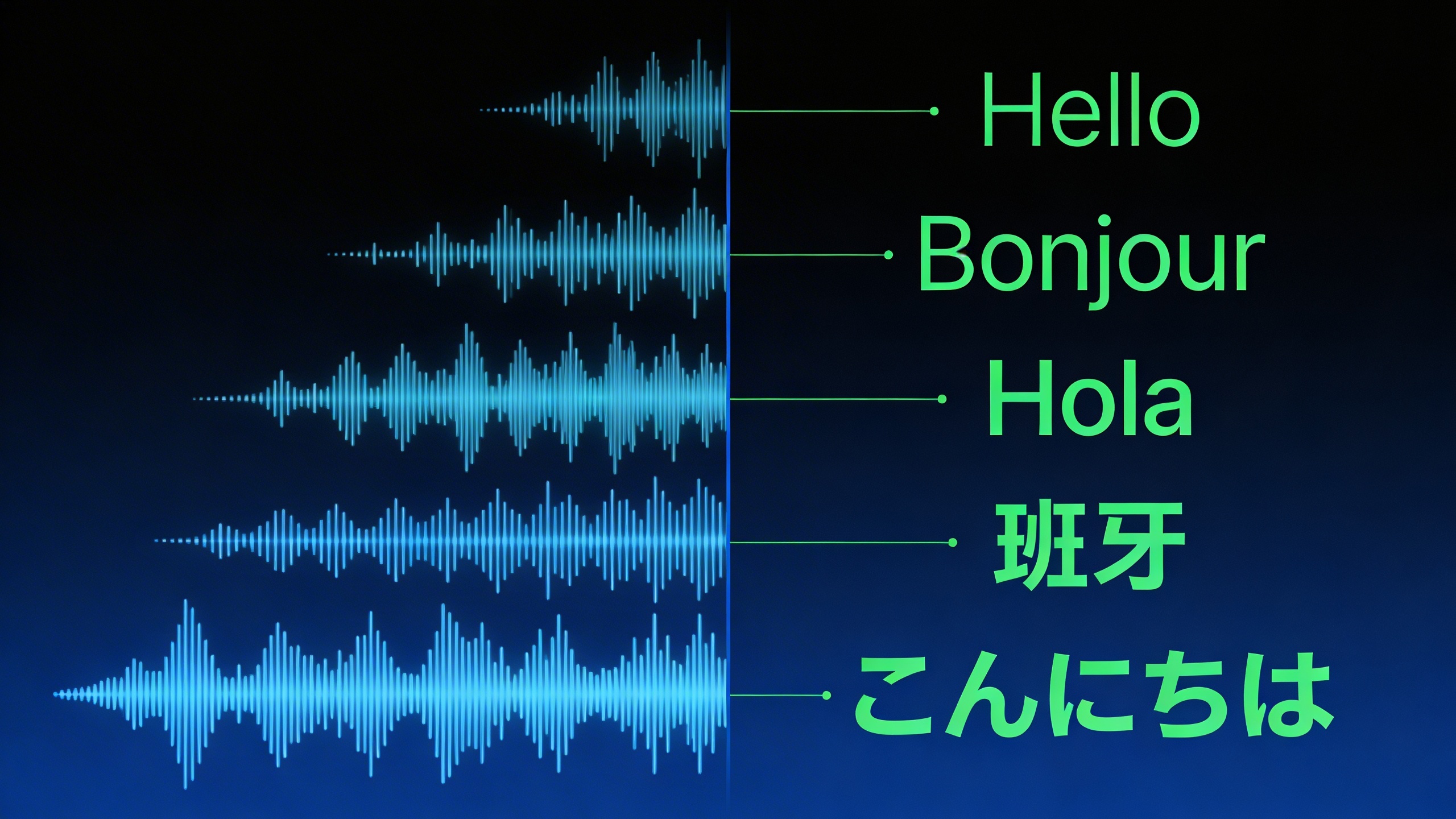
Audio translation is a multi-step process that first converts spoken words into text through automatic speech recognition (ASR), then translates that text into the target language. When you translate audio to text across languages, the system performs two distinct operations: it listens to the original speech, identifies the words being spoken, and simultaneously processes the meaning to produce accurate translations in real-time.
The process begins when audio translation services capture sound waves and convert them into digital signals. Advanced algorithms analyze speech patterns, identify individual phonemes, and reconstruct complete words and sentences. The system then applies natural language processing to understand context, grammar, and meaning before generating the final translated output.
Modern audio translation platforms can handle multiple speakers, background noise, and various accents with remarkable precision. Whether you’re translating audio to English from Mandarin, Spanish, or dozens of other languages, these systems adapt to different speaking styles and regional dialects to deliver consistent results.
The Difference Between Transcription and Translation
Understanding the distinction between transcription and translation is crucial for selecting the right service for your needs. Transcription converts spoken words into written text within the same language, maintaining the original linguistic structure and meaning. When you transcribe a recording, you’re creating a written record of exactly what was said, preserving the speaker’s original language.
Translation, however, involves converting meaning from one language into another while preserving context and intent. Audio translation combines both processes: first transcribing the original speech, then translating that content into the target language. This dual approach ensures accuracy in both speech recognition and cross-linguistic communication.
For professionals working with multilingual content, this distinction affects workflow decisions. Pure transcription services work best for creating meeting notes or documentation in the original language, while translate sound capabilities become essential when collaborating across language barriers or creating content for international audiences.
Key Technologies Behind Audio Translation
The foundation of effective audio translation rests on sophisticated automatic speech recognition engines that can process natural speech patterns with high accuracy. These ASR systems use deep learning models trained on vast datasets of human speech, enabling them to recognize words even in challenging acoustic environments with background noise or multiple speakers.
Machine translation algorithms form the second critical component, employing neural networks that understand context, idioms, and cultural nuances. Modern systems move beyond word-for-word translation to capture meaning and intent, producing natural-sounding output that maintains the speaker’s original message while adapting to the target language’s grammatical structure.
Real-time processing capabilities allow these technologies to work simultaneously, creating seamless translation experiences. Advanced audio translation services integrate both components through unified platforms that can translate audio streams instantly, making them invaluable for live conversations, international meetings, and content creation workflows.
The accuracy of these systems continues improving through machine learning, with leading platforms achieving recognition rates above 95% for clear speech in optimal conditions. However, factors like audio quality, speaker accents, technical terminology, and background noise can impact performance, making it important to understand both capabilities and limitations when implementing audio translation solutions.
Quality audio translation depends on continuous training data and algorithmic refinements that help systems better understand context, handle specialized vocabulary, and maintain consistency across different domains and speaking styles.
Types of Audio Translation Services Available
Modern audio translation services come in several distinct formats, each designed to meet specific business and personal needs. Understanding these different approaches helps you choose the right solution for your particular use case, whether you need instant results or maximum accuracy.
Real-Time Audio Translation
Real-time services translate audio to text as speech occurs, providing instant results with minimal delay. These systems excel in live conversations, customer service interactions, and situations where immediate understanding is crucial. Popular applications include international business calls, medical consultations with non-native speakers, and educational settings where students need instant translation support.
The primary advantage of real-time translation lies in its immediacy—participants can respond naturally without waiting for processing delays. However, this speed comes with trade-offs in accuracy, particularly when dealing with complex terminology, heavy accents, or poor audio quality. Real-time systems typically achieve 85-90% accuracy under optimal conditions, which may drop significantly in challenging environments.
Batch Audio File Translation
Batch processing allows you to translate audio files after recording, providing more time for sophisticated analysis and higher accuracy rates. This approach works exceptionally well for recorded interviews, podcasts, webinars, and archived content where immediate results aren’t necessary. Many organizations use batch translation for compliance documentation, market research analysis, and content localization projects.
When you translate audio using batch processing, advanced algorithms can perform multiple analysis passes, cross-reference context clues, and apply specialized dictionaries for technical terminology. This thorough approach typically yields 95-98% accuracy rates, making it ideal for situations where precision matters more than speed. Processing times range from a few minutes for short files to several hours for lengthy recordings with complex content.
Live Meeting and Conference Translation
Specialized conference translation services bridge the gap between real-time and batch processing, offering enhanced accuracy for structured business environments. These systems are specifically optimized for meeting scenarios, handling multiple speakers, managing background noise, and maintaining context across extended discussions.
Live meeting translation excels in corporate environments, international conferences, and educational seminars where professional-grade accuracy is essential. Advanced systems can distinguish between different speakers, maintain speaker identification throughout the session, and even translate sound from multiple microphones simultaneously. For organizations conducting regular multilingual meetings, tools like Sozai provide reliable transcription capabilities that can serve as a foundation for subsequent translation workflows.
The quality trade-offs in live meeting translation typically fall between real-time and batch processing. Most professional services achieve 90-95% accuracy by using specialized acoustic models trained on business vocabulary and meeting dynamics. These systems often include features like automatic punctuation, paragraph breaks, and speaker labels that enhance the final translated output.
| Service Type | Processing Speed | Typical Accuracy | Best Use Cases |
|---|---|---|---|
| Real-Time | Instant | 85-90% | Live conversations, customer service |
| Batch Processing | Minutes to hours | 95-98% | Recorded content, documentation |
| Live Meeting | Near real-time | 90-95% | Business meetings, conferences |
Choosing between these audio translation services depends on balancing your specific requirements for speed, accuracy, and cost. Consider factors like audio quality, speaker accents, technical vocabulary, and the consequences of translation errors when making your decision.

Choosing the Right Audio Translation Method
Selecting the optimal approach to translate audio to text requires careful evaluation of your specific needs, budget constraints, and quality requirements. The decision between different translation methods can significantly impact both the accuracy of your results and the efficiency of your workflow.
Automated vs Human-Assisted Translation
Modern automated systems can translate audio with impressive speed and reasonable accuracy for common languages and clear recordings. These AI-powered solutions excel at processing large volumes of content quickly, making them ideal for real-time applications like live subtitling or rapid content analysis. When you need to translate sound from straightforward conversations or presentations, automated tools often provide sufficient quality at a fraction of the cost.
However, human-assisted translation becomes essential when dealing with complex content that requires cultural nuance, technical terminology, or creative interpretation. Professional linguists can navigate idiomatic expressions, regional dialects, and context-dependent meanings that automated systems might miss. For critical business communications, legal proceedings, or medical consultations, the additional investment in human expertise typically justifies the higher cost through improved accuracy and cultural appropriateness.
A hybrid approach often delivers the best results, combining automated transcription with human review and editing. This method allows you to translate audio efficiently while maintaining quality standards, particularly useful for translating audio to english from languages with significant structural differences.
Cloud-Based vs On-Premise Solutions
Cloud-based audio translation services offer unmatched convenience and scalability. These platforms provide instant access to advanced AI models without requiring significant hardware investments or technical maintenance. You can translate audio from any device with internet connectivity, making them perfect for distributed teams or mobile workflows. Most cloud solutions also receive regular updates and improvements without user intervention.
The primary concerns with cloud-based systems center on data privacy and internet dependency. When you upload audio files to external servers, you must trust the service provider’s security measures and data handling practices. For organizations dealing with sensitive information, this represents a significant consideration in the decision-making process.
On-premise solutions provide complete control over your data and processing environment. These systems keep all audio content within your organization’s infrastructure, eliminating external data transmission risks. Large enterprises with strict compliance requirements often prefer this approach despite the higher initial investment and ongoing maintenance responsibilities.
Consider your internet reliability when choosing between these options. Cloud services require stable connections for optimal performance, while on-premise solutions function independently of external network conditions.
Free vs Premium Translation Services
Free audio translation services serve as excellent starting points for basic needs and testing purposes. These platforms typically impose limitations on file size, processing time, or monthly usage quotas. While suitable for occasional personal use or small-scale projects, free services often lack the advanced features and support necessary for professional applications.
Premium services justify their cost through superior accuracy, faster processing speeds, and comprehensive language support. Professional-grade platforms offer features like speaker identification, timestamp synchronization, and custom vocabulary training. When you regularly translate audio for business purposes, the time savings and improved quality typically offset the subscription costs.
| Factor | Free Services | Premium Services |
|---|---|---|
| Accuracy | 70-85% | 90-98% |
| Processing Speed | Standard | Priority/Real-time |
| Language Support | Limited | Extensive |
| Customer Support | Community forums | Dedicated assistance |
The decision between free and premium options should align with your quality requirements and usage frequency. For professionals who frequently translate audio content, investing in premium services typically provides better long-term value through improved efficiency and results. Consider starting with free trials of premium services to evaluate their capabilities before committing to paid subscriptions.
Your choice of audio translation services should ultimately balance accuracy requirements, security concerns, budget constraints, and workflow integration needs to deliver optimal results for your specific use case.

Step-by-Step Guide to Translating Audio to Text
Converting audio content into written text across different languages requires a systematic approach that balances accuracy with efficiency. Whether you’re working with recorded meetings, international webinars, or multilingual interviews, following a structured process ensures optimal results when you translate audio to text.
Preparing Your Audio Files for Translation
The foundation of successful audio translation lies in proper file preparation. High-quality source material dramatically improves transcription accuracy and reduces the time needed for post-processing corrections.
Start by evaluating your audio quality using these technical criteria:
- Sample rate of at least 16kHz for speech content
- Clear speaker separation with minimal background noise
- Consistent volume levels throughout the recording
- File formats in WAV, MP3, or M4A for maximum compatibility
Audio enhancement techniques can significantly improve translation outcomes. Use noise reduction software to eliminate background hum, air conditioning sounds, or traffic noise. If multiple speakers are present, consider using audio editing tools to create separate channels for each voice, making it easier for translation services to distinguish between different languages or accents.
File organization plays a crucial role in workflow efficiency. Create a naming convention that includes the source language, target language, and recording date. For example: “meeting_spanish_to_english_2024.wav” provides immediate context for both automated systems and human reviewers.
Using Online Audio Translation Tools
Modern audio translation services offer varying levels of automation and accuracy. Understanding the strengths and limitations of different platforms helps you select the most appropriate tool for your specific needs.
When evaluating online audio translation tools, consider these essential criteria:
| Feature | Importance | What to Look For |
|---|---|---|
| Language Support | Critical | Native support for both source and target languages |
| File Size Limits | High | Ability to handle your typical recording lengths |
| Processing Speed | Medium | Turnaround time that meets your deadlines |
| Privacy Controls | Critical | Data encryption and deletion policies |
The upload process typically involves selecting your source audio file, specifying the original language, and choosing your target language for translation. Many platforms now offer automatic language detection, but manually confirming the source language improves accuracy, especially when translating audio to English from languages with similar phonetic patterns.
For users who frequently work with voice recordings and need reliable transcription capabilities, tools like Sozai provide AI-powered transcription that can serve as a foundation for translation workflows, particularly when working with clear, single-speaker audio content.
Processing times vary significantly based on audio length, language complexity, and service type. Automated services typically complete translations within minutes, while human-assisted services may require several hours or days for complex content.
Post-Translation Editing and Quality Control
Raw translation output rarely meets publication standards without careful review and editing. Implementing a systematic quality control process ensures your final text accurately represents the original audio content while maintaining natural readability in the target language.
Begin your review process by comparing the translated text against the original audio. Listen to key sections while reading the corresponding translation, paying attention to:
- Technical terminology that may require specialized knowledge
- Cultural references that need localization rather than literal translation
- Speaker identification and dialogue attribution
- Time stamps for important sections or quotes
Grammar and syntax editing represents the next crucial phase. Even accurate translations may contain awkward phrasing or grammatical structures that don’t flow naturally in the target language. Focus on sentence structure, verb tenses, and idiomatic expressions that enhance readability without changing the original meaning.
Fact-checking becomes particularly important when you translate sound containing technical information, legal content, or scientific data. Cross-reference translated numbers, dates, names, and specialized terms against the original audio to prevent costly errors.
Consider implementing a two-pass editing system: first for accuracy and completeness, then for style and readability. This approach helps maintain the balance between faithful translation and natural language flow that characterizes professional translation work.
Final formatting should match your intended use case, whether that’s meeting minutes, interview transcripts, or content for publication. Include speaker labels, paragraph breaks, and any necessary formatting that makes the translated text easily scannable and professionally presented.
Maximizing Audio Translation Accuracy
The difference between mediocre and exceptional audio translation results often lies in the preparation and understanding of key factors that influence accuracy. When you translate audio to text across languages, several technical and linguistic elements can significantly impact the final output quality.
Optimizing Audio Quality for Better Results
Audio quality serves as the foundation for successful translation outcomes. Before you translate audio using any service, ensure your recording meets specific technical requirements that modern audio translation services depend on for optimal performance.
Start with a minimum sample rate of 16 kHz, though 44.1 kHz provides superior results for complex multilingual content. Your audio should maintain consistent volume levels throughout the recording, avoiding sudden peaks or drops that can confuse translation algorithms. Background noise presents one of the biggest challenges when you translate sound to text, so record in quiet environments whenever possible.
File format selection also impacts translation accuracy. WAV and FLAC formats preserve audio fidelity better than compressed MP3 files, particularly important when translating audio to English from languages with subtle tonal differences. If you must use compressed formats, maintain bitrates above 128 kbps to preserve essential audio details.
Speaker separation becomes crucial for multi-person recordings. Position microphones appropriately to capture clear individual voices, as overlapping speech significantly reduces translation accuracy across all language pairs.
Understanding Language Pair Challenges
Different language combinations present unique obstacles that affect translation quality. When translating audio between languages with similar linguistic roots, such as Spanish to Italian, accuracy rates typically exceed 85%. However, translating between linguistically distant languages like Mandarin to German requires additional consideration of structural and phonetic differences.
Tonal languages pose particular challenges for audio translation services. Mandarin, Vietnamese, and Thai rely heavily on pitch variations to convey meaning, making accurate voice recognition more complex. These languages benefit from slower speech rates and clearer articulation during recording.
Cultural context significantly influences translation accuracy. Idiomatic expressions, regional dialects, and cultural references often lack direct equivalents in target languages. Professional audio translation services typically handle these nuances better than automated solutions, though they require longer processing times.
Technical terminology and industry-specific jargon present additional complexity. Medical, legal, and scientific content demands specialized vocabulary knowledge that general translation services may not possess. Consider services that offer domain-specific translation models for highly technical content.
Common Translation Errors and How to Avoid Them
Understanding frequent translation mistakes helps you select appropriate services and prepare audio content effectively. Homophone confusion represents one of the most common errors, where words that sound similar receive incorrect translations. This particularly affects English translations from languages with extensive homophone sets.
Context misinterpretation occurs when translation systems lack sufficient surrounding information to determine correct meaning. Provide complete sentences rather than isolated phrases, and include relevant background information when submitting audio for translation.
Proper noun handling often creates translation inconsistencies. Names, places, and brand references may receive unnecessary translation or incorrect transliteration. Many modern audio translation services allow you to specify proper nouns that should remain unchanged, improving overall accuracy.
Speaker identification errors in multi-person recordings can attribute statements to wrong individuals, creating confusion in translated transcripts. Use clear speaker introductions and maintain consistent speaking patterns to help translation systems track individual voices accurately.
To minimize these issues, review translated output carefully and maintain glossaries of important terms specific to your content. When working with critical documents, consider using multiple translation services to cross-verify results, particularly for complex technical or legal content where accuracy is paramount.
For users seeking reliable audio translation capabilities, tools like Sozai offer advanced transcription features that can serve as a solid foundation for subsequent translation workflows, ensuring you start with accurate source text before applying translation services.
Industry Applications and Use Cases
Audio translation services have transformed how organizations across industries handle multilingual content, breaking down language barriers and expanding global reach. Understanding sector-specific applications helps businesses identify the most effective strategies for implementing these technologies in their workflows.
Business and Corporate Communications
Corporate environments present diverse scenarios where organizations need to translate audio content efficiently. International conference calls, client presentations, and training sessions often require real-time or post-event translation to ensure all stakeholders understand critical information regardless of their native language.
Sales teams frequently encounter situations where they must translate audio recordings from client meetings conducted in different languages. This process enables better follow-up communications and ensures nothing gets lost in translation during deal negotiations. Customer service departments also benefit significantly when they can translate audio from support calls, allowing them to analyze feedback patterns across different markets.
The return on investment for businesses implementing audio translation services typically manifests through improved communication efficiency and expanded market reach. Companies report reducing translation costs by up to 70% compared to traditional human translation services while maintaining quality standards for internal communications.
Educational and Training Content
Educational institutions and corporate training departments face increasing demand for multilingual content accessibility. Universities with international student populations regularly need to translate audio lectures and seminars, making course materials accessible to non-native speakers.
Online learning platforms have revolutionized how they approach content localization by integrating automated systems that can translate audio to text and subsequently into multiple languages. This workflow allows course creators to develop content once and distribute it globally with minimal additional effort.
Professional development programs benefit enormously when they can translate sound from expert presentations and workshops. Training coordinators can quickly convert recorded sessions into text transcripts and then translate them for international teams, ensuring consistent knowledge transfer across global offices.
For organizations creating educational content, tools like Sozai streamline the initial transcription process, providing accurate text that serves as the foundation for subsequent translation work. This approach significantly reduces the time required to produce multilingual training materials.
Media and Entertainment Translation
The media industry relies heavily on audio translation services for content distribution across international markets. Podcast creators increasingly need solutions that can translate audio content to reach global audiences, with many platforms now offering automated translation features that handle multiple language pairs simultaneously.
Documentary filmmakers and news organizations frequently work with source material in various languages, requiring efficient methods to translate audio interviews and field recordings. The ability to quickly convert spoken content into text and then translate it enables faster content production cycles and broader audience reach.
Streaming platforms have transformed their localization workflows by implementing systems that can translate audio from original content into dozens of languages. This capability allows content creators to focus on production while automated systems handle the technical aspects of making content accessible to international viewers.
Gaming companies represent another significant use case, particularly when translating audio from user-generated content or international gaming events. The ability to quickly process and translate sound from live streams and recorded gameplay helps gaming platforms maintain engaged global communities.
These industry applications demonstrate how audio translation services have become essential tools for organizations operating in our interconnected global economy, enabling seamless communication across language boundaries while maintaining operational efficiency.
Future Trends in Audio Translation Technology
The landscape of audio translation technology is evolving at an unprecedented pace, driven by breakthroughs in artificial intelligence and machine learning. These advances are reshaping how we translate audio to text across multiple languages, making real-time cross-linguistic communication more accessible than ever before. Understanding these emerging trends helps organizations and individuals prepare for the next generation of audio translation services.
AI Advancements in Speech Recognition
Modern neural networks are revolutionizing the accuracy and speed of speech recognition systems. Deep learning models now process acoustic patterns with remarkable precision, reducing error rates in audio translation by up to 40% compared to traditional methods. These AI systems excel at handling diverse accents, speaking styles, and background noise conditions that previously challenged conventional translation tools.
Transformer-based architectures are particularly promising for translating audio content, as they can simultaneously process multiple language patterns and contextual cues. This parallel processing capability enables more nuanced understanding of speaker intent and cultural context, resulting in translations that capture both literal meaning and conversational subtleties.
Edge computing integration is another significant development, allowing audio translation services to process speech locally on devices rather than relying solely on cloud connectivity. This advancement reduces latency and enhances privacy protection, making real-time translation feasible in environments with limited internet access.
Emerging Multilingual Capabilities
Next-generation translation systems are moving beyond simple language pairs toward comprehensive multilingual models that can translate audio between dozens of languages simultaneously. These systems leverage shared linguistic representations, enabling them to translate sound from lesser-known languages by drawing connections to more widely spoken ones.
Code-switching detection represents another frontier in multilingual audio processing. Modern systems can identify when speakers switch between languages mid-conversation, automatically adjusting translation parameters to maintain accuracy across linguistic boundaries. This capability is particularly valuable for international business meetings and multicultural educational settings.
Zero-shot translation capabilities are emerging, where systems can translate audio to text in language pairs they haven’t explicitly trained on. By understanding underlying linguistic structures, these models can bridge communication gaps between previously incompatible language combinations, expanding global accessibility of audio content.
Integration with Voice Assistants and IoT
The convergence of audio translation technology with Internet of Things devices is creating new possibilities for seamless cross-language communication. Smart home systems, wearable devices, and automotive platforms are incorporating real-time translation features that automatically translate audio between household members, visitors, or passengers speaking different languages.
Voice assistant integration is becoming more sophisticated, with platforms capable of translating audio to English and other target languages while maintaining natural conversation flow. These systems can now handle complex multi-turn dialogues, remembering context across translation sessions and adapting to individual speaking patterns over time.
Ambient translation environments are emerging, where IoT sensors detect multiple speakers and automatically route translated audio to appropriate devices or participants. Conference rooms equipped with these systems can provide personalized translation feeds to each attendee, enabling truly multilingual collaboration without traditional language barriers.
As these technologies mature, we can expect audio translation services to become increasingly invisible and intuitive, seamlessly facilitating global communication in ways that feel natural and effortless to users across all technical skill levels.