
The digital transformation of modern workplaces has made AI transcription an indispensable tool for professionals across every industry. From journalists capturing interviews to executives documenting strategic meetings, the ability to instantly convert spoken words into accurate, searchable text has revolutionized how we create, share, and preserve information. What once required hours of manual typing can now be accomplished in minutes, freeing teams to focus on analysis, decision-making, and creative work rather than administrative tasks.
Today’s transcription service landscape offers dozens of options, each promising superior accuracy and unique features. However, choosing the right transcription generator for your specific needs requires understanding the nuanced differences between platforms, pricing structures, and integration capabilities. The wrong choice can lead to frustrating inaccuracies, workflow disruptions, and unexpected costs that compound over time.
This comprehensive guide examines the leading ai transcription services available today, providing detailed comparisons of accuracy rates, feature sets, and real-world performance. You’ll discover essential evaluation criteria, understand pricing models that align with your budget, and learn how to seamlessly integrate your chosen transcription application into existing workflows for maximum productivity gains.
What Are AI Transcription Services and How Do They Work
AI transcription services represent a revolutionary approach to converting spoken words into written text, leveraging advanced artificial intelligence to process audio and video content with remarkable speed and accuracy. Unlike traditional transcription methods that rely entirely on human typists, these services use sophisticated algorithms to automatically recognize speech patterns and generate written transcripts in real-time or near real-time.
At their core, ai transcription services function as intelligent intermediaries between human speech and digital text, transforming the way we capture, process, and utilize spoken information across countless applications and industries.
Understanding AI Speech Recognition Technology
Modern transcription applications rely on two fundamental technologies: machine learning and neural networks. Machine learning algorithms analyze vast datasets of human speech to identify patterns, accents, and linguistic structures. These systems continuously improve their performance by processing millions of hours of audio data, learning to recognize everything from regional dialects to technical terminology.
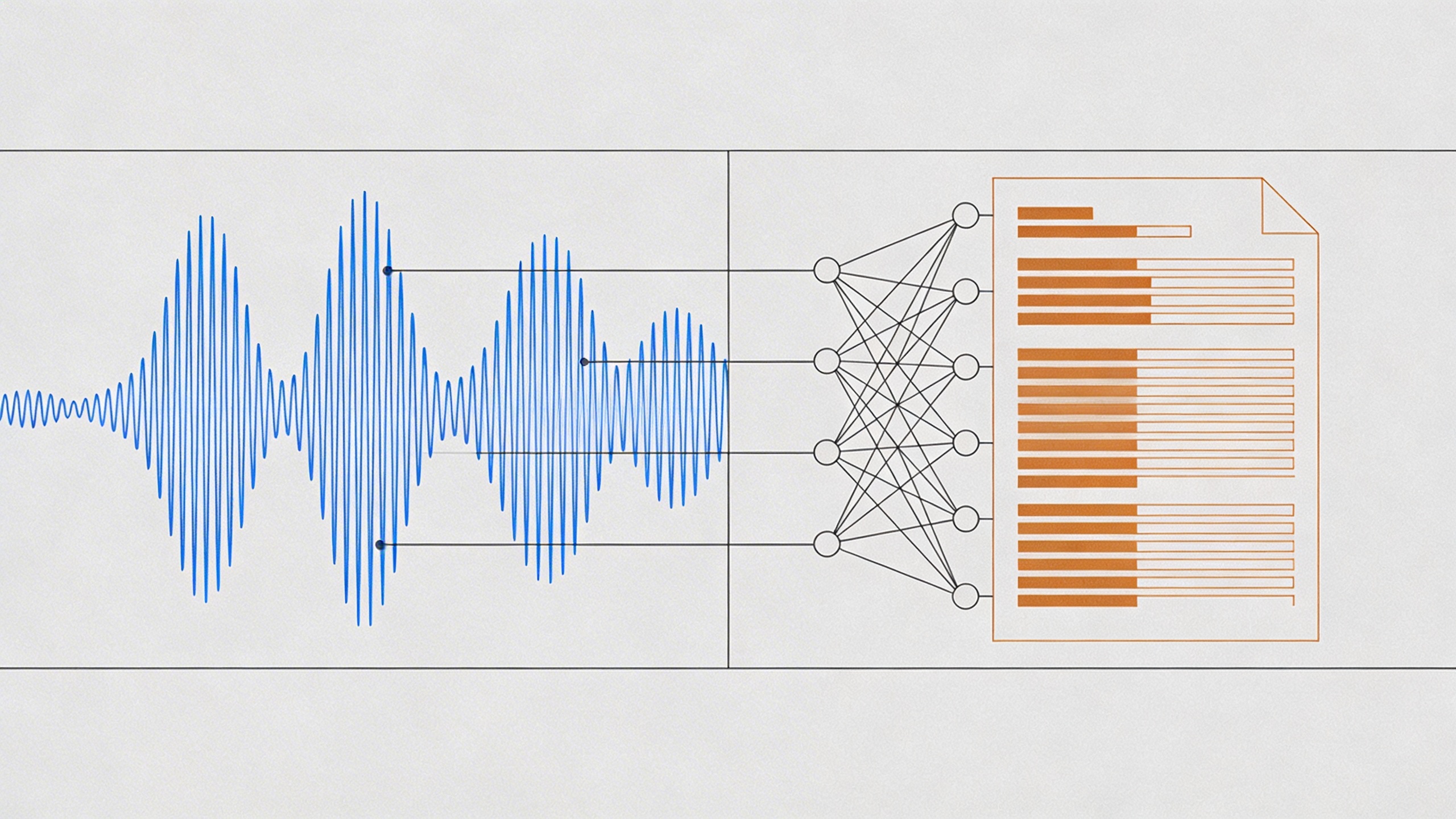
Neural networks, particularly deep learning models, form the backbone of advanced transcription generators. These networks mimic the human brain’s processing capabilities by using interconnected layers of artificial neurons. When audio enters the system, these networks break down the sound waves into phonemes, then reconstruct them into words, phrases, and complete sentences.
The process begins with acoustic modeling, where the AI identifies individual sounds within the audio stream. Next, language modeling helps the system understand context and predict likely word sequences. Finally, pronunciation modeling ensures the transcription service accurately matches sounds to their corresponding written forms, even when dealing with homophones or unclear pronunciation.
Key Differences Between AI and Human Transcription
The most striking difference between AI and human transcription lies in processing speed. While human transcriptionists typically require three to four times the audio length to complete a transcript, ai transcription services can generate results in minutes or even seconds, regardless of content duration.
Accuracy rates present a more nuanced comparison. Human transcriptionists generally achieve 95-99% accuracy under ideal conditions, particularly with clear audio and familiar subject matter. Advanced AI systems now reach 85-95% accuracy for high-quality recordings, with some specialized models achieving near-human performance in controlled environments.
| Factor | AI Transcription | Human Transcription |
|---|---|---|
| Speed | Real-time to minutes | 3-4x audio length |
| Cost | $0.10-$2.00 per hour | $15-$50 per hour |
| Accuracy | 85-95% | 95-99% |
| Availability | 24/7 instant access | Business hours, scheduling required |
However, human transcriptionists excel in areas where context and nuance matter most. They can identify speakers by voice, understand cultural references, and make judgment calls about unclear audio segments. AI systems, while improving rapidly, still struggle with heavy accents, overlapping speech, and highly technical or specialized vocabulary.
Common Use Cases for AI Transcription
Business applications represent the largest segment of ai transcription services usage. Companies utilize these tools for meeting documentation, customer service call analysis, and compliance recording. Sales teams rely on transcription applications to review client conversations and identify improvement opportunities, while legal professionals use them to process depositions and court proceedings efficiently.
Educational institutions have embraced AI transcription for lecture capture, student accessibility services, and research documentation. Students with hearing impairments benefit from real-time transcription during classes, while researchers can quickly convert interview recordings into searchable text for analysis.
Personal applications continue expanding as the technology becomes more accessible. Content creators use transcription generators to produce captions for videos, while journalists leverage these tools to quickly process interview recordings. Healthcare professionals rely on AI transcription for patient note documentation, and individuals use services like Sozai for personal voice memos, meeting notes, and daily productivity tasks.
The versatility of modern ai transcription services makes them valuable tools across virtually every industry, from media production and market research to healthcare and education, fundamentally changing how we interact with spoken content in our increasingly digital world.
Essential Features to Look for in AI Transcription Services
Selecting the right ai transcription service requires careful evaluation of several critical features that directly impact your workflow efficiency and output quality. Understanding these essential capabilities will help you identify which transcription application best aligns with your specific requirements and use cases.
Accuracy and Language Support
Accuracy stands as the most fundamental criterion when evaluating any transcription service. Professional-grade ai transcription services typically achieve accuracy rates between 85-95% for clear audio recordings, with premium platforms reaching even higher benchmarks under optimal conditions. However, accuracy varies significantly based on audio quality, speaker accents, background noise, and technical terminology usage.
When assessing accuracy, consider testing potential services with your specific audio types. A transcription generator that excels with corporate meetings might struggle with medical dictation or legal proceedings due to specialized vocabulary requirements. Many leading platforms offer free trials or sample transcriptions, allowing you to evaluate performance with your actual content before committing.
Multilingual capabilities have become increasingly important as businesses operate across global markets. Advanced ai transcription services support dozens of languages and dialects, with some offering real-time language detection and switching within single recordings. Look for platforms that provide robust support for your required languages, including proper handling of accents, regional variations, and code-switching between languages during conversations.
Speaker identification and diarization represent additional accuracy-enhancing features. These capabilities automatically distinguish between different speakers in multi-person conversations, creating clearly labeled transcripts that maintain conversation flow and attribution. This functionality proves invaluable for meeting transcriptions, interviews, and collaborative discussions.
File Format Compatibility and Integration Options
Comprehensive file format support ensures your chosen transcription application can handle diverse audio and video inputs without requiring additional conversion steps. Professional services typically support common formats including MP3, WAV, FLAC, MP4, MOV, and AVI, while also accommodating less common formats used in specialized industries.
Upload flexibility varies across platforms, with some offering drag-and-drop web interfaces, mobile app uploads, or direct recording capabilities. Consider whether you need real-time transcription during live events, batch processing for multiple files, or scheduled transcription for regular content workflows.
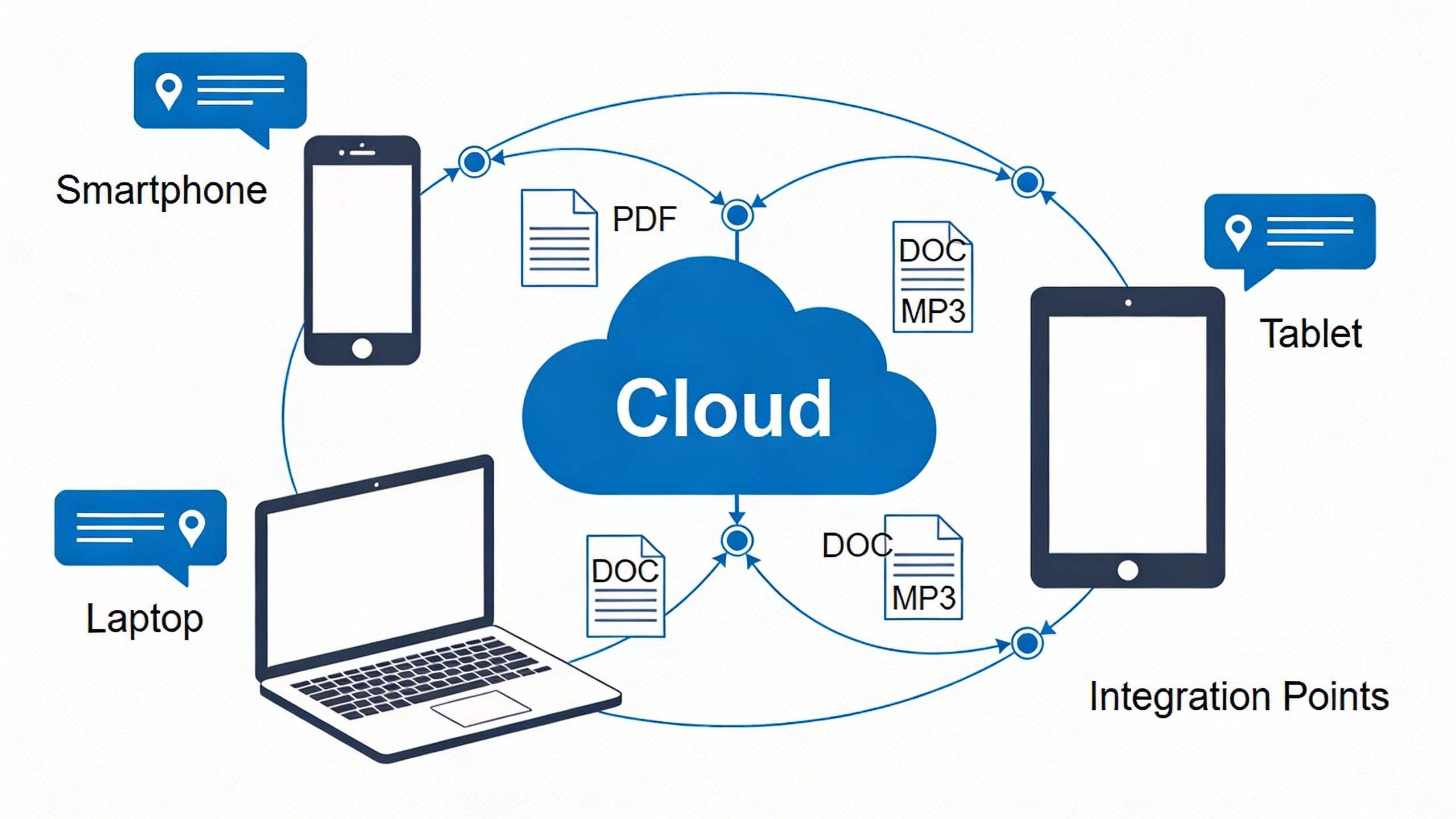
API integration capabilities enable seamless incorporation of transcription functionality into existing software ecosystems. Robust APIs allow developers to embed ai transcription directly into content management systems, video conferencing platforms, or custom applications. Look for services offering RESTful APIs with comprehensive documentation, webhook support for automated workflows, and SDKs for popular programming languages.
Cloud storage integrations with platforms like Google Drive, Dropbox, or Microsoft OneDrive streamline file management and collaborative workflows. Some transcription services also integrate directly with popular productivity tools, enabling automatic transcription of recorded meetings or voice memos without manual file transfers.
Export options affect how easily you can utilize transcribed content across different platforms. Quality services provide multiple export formats including plain text, SRT subtitles, VTT captions, Microsoft Word documents, and structured JSON for further processing.
Security and Privacy Considerations
Data security represents a critical concern when selecting any transcription service, particularly for organizations handling sensitive information. Enterprise-grade encryption should protect data both in transit and at rest, with many professional platforms implementing AES-256 encryption standards and secure HTTPS connections for all data transfers.
Compliance certifications indicate a service’s commitment to maintaining security standards required by various industries. Look for platforms holding certifications such as SOC 2 Type II, HIPAA compliance for healthcare applications, or GDPR compliance for European operations. These certifications demonstrate adherence to rigorous security protocols and regular third-party audits.
Data retention policies vary significantly across ai transcription services. Some platforms automatically delete uploaded files and transcripts after specified periods, while others maintain indefinite storage unless explicitly requested for deletion. Understanding these policies helps ensure compliance with your organization’s data governance requirements.
Processing location affects both performance and legal compliance. Services offering on-premises deployment or guaranteed data processing within specific geographic regions provide additional control over sensitive information. Some platforms also offer zero-retention policies, where audio files are processed and immediately deleted without storage.
User access controls and audit trails enable administrators to monitor transcription activity and maintain accountability. Advanced platforms provide role-based permissions, detailed activity logs, and integration with single sign-on systems for enhanced security management.
Top AI Transcription Services Compared
The ai transcription landscape offers solutions ranging from enterprise-grade platforms to budget-friendly alternatives, each designed to meet specific user needs and industry requirements. Understanding the strengths and limitations of different transcription services helps you make an informed decision based on your accuracy requirements, budget constraints, and specialized features.
When evaluating ai transcription services, consider factors beyond basic speech-to-text conversion. The most effective platforms combine high accuracy rates with robust security features, seamless integrations, and user-friendly interfaces that streamline your workflow.
Enterprise-Grade Solutions
Enterprise-level transcription services prioritize security, scalability, and advanced features that support large organizations and professional workflows. These platforms typically offer comprehensive admin controls, detailed analytics, and enterprise-grade security certifications.
Microsoft Azure Speech Services stands out for organizations already invested in the Microsoft ecosystem, providing seamless integration with Office 365 and Teams. The platform supports real-time transcription and offers customizable language models that adapt to industry-specific terminology and accents.
Amazon Transcribe delivers robust performance for businesses requiring high-volume processing capabilities. Its automatic punctuation and speaker identification features make it particularly valuable for meeting transcriptions and interview analysis. The service integrates naturally with other AWS tools, making it an attractive option for companies using Amazon’s cloud infrastructure.
Google Cloud Speech-to-Text excels in multilingual environments, supporting over 125 languages and variants. Its advanced noise cancellation and automatic speech recognition capabilities make it suitable for challenging audio conditions often encountered in enterprise settings.
For organizations seeking a user-friendly transcription application with enterprise features, Sozai provides AI-powered transcription across iOS, Android, and macOS platforms, combining accessibility with professional-grade accuracy for meeting notes and voice-to-text conversion.
Budget-Friendly Options
Cost-effective ai transcription solutions prove that high-quality speech recognition doesn’t require substantial investment. Many platforms offer generous free tiers that accommodate small businesses, students, and individual users without compromising essential functionality.
Otter.ai provides one of the most accessible entry points into professional transcription services. Its free tier includes monthly transcription minutes and basic editing tools, while paid plans add features like advanced search capabilities and team collaboration tools. The platform excels at meeting transcriptions and offers real-time collaboration features.
Rev.ai combines automated transcription with human review options, allowing users to choose between speed and accuracy based on their specific needs. The hybrid approach makes it particularly valuable for content creators who need reliable transcripts but have budget constraints.
Whisper by OpenAI, available as an open-source transcription generator, offers developers and tech-savvy users a powerful solution without subscription costs. While it requires technical setup, the accuracy rivals premium services, making it an excellent choice for organizations with development resources.
| Service Type | Best For | Key Advantage | Free Tier |
|---|---|---|---|
| Otter.ai | Small teams, students | Real-time collaboration | 600 minutes/month |
| Rev.ai | Content creators | Hybrid AI/human option | 5 hours/month |
| Whisper | Developers, tech users | Open-source flexibility | Unlimited (self-hosted) |
Many budget-friendly transcription services offer API access, enabling developers to integrate speech-to-text capabilities into existing applications without building transcription technology from scratch.
Specialized Industry Solutions
Certain industries require transcription services that understand specialized terminology, comply with strict regulations, and offer enhanced security measures. These sector-specific solutions often provide superior accuracy for domain-specific content.
Medical transcription demands exceptional accuracy and HIPAA compliance. Nuance Dragon Medical One leads this space with its deep understanding of medical terminology and integration with electronic health record systems. The platform recognizes complex medical terms, drug names, and procedural language that general-purpose ai transcription services often misinterpret.
Legal professionals require transcription applications that handle courtroom audio, depositions, and legal dictation with precision. Verbit specializes in legal transcription, offering features like speaker identification for multi-party proceedings and integration with legal case management systems. The platform maintains strict security protocols essential for confidential legal communications.
Academic and research institutions benefit from transcription services designed for educational content. Trint offers features specifically valuable for researchers, including timestamp accuracy for citation purposes and collaboration tools that support peer review processes. Its ability to handle multiple speakers and academic terminology makes it particularly suitable for lecture transcription and interview analysis.
Broadcasting and media companies often choose specialized solutions like Speechmatics, which excels at handling diverse accents, background noise, and real-time transcription requirements common in media production. These platforms often include features like automatic subtitle generation and broadcast-quality timing accuracy.
The choice between general-purpose and specialized transcription services ultimately depends on your specific accuracy requirements, security needs, and industry compliance standards. While general solutions offer broader functionality and competitive pricing, specialized platforms provide the precision and features that certain professional contexts demand.
Accuracy and Performance Benchmarks
Understanding the accuracy and performance capabilities of AI transcription services requires examining multiple factors that influence results. While marketing materials often tout impressive accuracy rates, real-world performance varies significantly based on audio conditions, content complexity, and use case requirements.
Factors That Affect Transcription Quality
Audio quality serves as the foundation for accurate transcription results. Clear recordings with minimal background noise typically achieve accuracy rates between 85-95%, while poor audio conditions can reduce performance to 60-70%. The sampling rate, bit depth, and compression format all impact how effectively an AI transcription service can process spoken content.
Speaker characteristics present another critical variable. Native speakers with standard accents generally receive more accurate transcriptions than those with heavy regional dialects or non-native pronunciation patterns. Multiple speakers, overlapping conversations, and rapid speech patterns challenge even the most sophisticated transcription generators, often requiring human review for optimal results.
Environmental factors significantly influence performance outcomes. Background music, crowd noise, phone line quality, and room acoustics create additional processing challenges. Professional transcription applications typically include noise reduction features, but these cannot completely compensate for severely compromised audio sources.
Testing Methodologies and Metrics
Word Error Rate (WER) represents the industry standard for measuring transcription accuracy. This metric calculates the percentage of incorrectly transcribed words by comparing the output against human-verified reference text. A WER of 10% means one in every ten words contains an error, substitution, or omission.
Confidence scores provide additional insight into transcription reliability. These numerical values, typically ranging from 0 to 1, indicate how certain the AI model feels about each transcribed word or phrase. Higher confidence scores generally correlate with greater accuracy, helping users identify sections that may require manual review.
Real-time factor (RTF) measures processing speed relative to audio duration. An RTF of 0.5 means the transcription service processes one hour of audio in thirty minutes. Batch processing typically achieves better accuracy than real-time transcription due to additional processing time and context analysis.
Real-World Performance Expectations
Professional meeting recordings with clear audio and single speakers often achieve 90-95% accuracy with leading AI transcription services. These optimal conditions allow transcription applications to leverage their full processing capabilities and language models effectively.
Conversational content with multiple participants typically produces 80-90% accuracy rates. Cross-talk, interruptions, and varying speaker volumes create challenges that require more sophisticated processing algorithms and potentially manual correction.
Technical presentations, medical dictation, and specialized terminology present unique challenges for general-purpose transcription generators. Domain-specific vocabulary and acronyms may require custom models or post-processing to achieve acceptable accuracy levels.
Phone interviews and low-quality recordings represent the most challenging scenarios, often producing 70-85% accuracy rates. Compressed audio, network artifacts, and limited frequency ranges constrain the available information for AI processing.
For users seeking reliable transcription solutions, tools like Sozai offer optimized performance across various audio conditions while providing transparent confidence metrics to help assess output quality.
Setting realistic expectations based on your specific use case ensures better satisfaction with chosen transcription services. Consider conducting pilot tests with representative audio samples to evaluate performance before committing to long-term solutions.
Pricing Models and Value Considerations
Selecting the right ai transcription service requires careful evaluation of pricing structures and their alignment with your specific usage patterns. Different providers offer varying cost models, each with distinct advantages depending on your transcription volume and budget constraints.
Understanding Different Pricing Structures
Most transcription services employ one of three primary pricing approaches. Per-minute pricing charges a fixed rate for each minute of audio processed, typically ranging from $0.10 to $0.50 per minute. This model works well for sporadic users who transcribe occasionally but can become expensive for high-volume applications.
Subscription-based pricing offers unlimited or high-volume transcription for a monthly fee, usually between $10 to $100 per month. These plans often include additional features like team collaboration tools and priority processing. For organizations processing more than 10 hours monthly, subscription models typically provide better value than per-minute rates.
Usage-based tiers combine elements of both approaches, offering monthly allowances with overage charges. A transcription application might include 300 minutes monthly for $20, then charge $0.15 per additional minute. This hybrid model provides predictable baseline costs while accommodating usage spikes.
Cost-Benefit Analysis Framework
Calculate your potential return on investment by comparing ai transcription services against manual alternatives. Professional human transcription typically costs $1.00 to $3.00 per minute and requires 3-4 hours for each hour of audio. AI solutions reduce both time and cost by 80-90% while maintaining acceptable accuracy for most business applications.
Consider your time value when evaluating options. If manual transcription takes you 4 hours at a $50 hourly rate, that represents $200 in opportunity cost per hour of audio. Even premium ai transcription services at $0.50 per minute ($30 per hour) deliver substantial savings while freeing your time for higher-value activities.
Factor in accuracy requirements for your cost analysis. Legal or medical transcription may justify higher costs for services offering 99% accuracy, while meeting notes or content creation might accept 95% accuracy at lower price points. Match your precision needs with appropriate service tiers to optimize value.
Hidden Costs to Watch For
Many transcription generator platforms include additional charges that significantly impact total costs. Storage fees for keeping transcripts beyond basic retention periods can add $5-15 monthly. Export fees for downloading transcripts in specific formats like Word or PDF may cost $0.05-0.10 per document.
Advanced features often carry premium charges. Speaker identification, custom vocabulary training, or real-time transcription capabilities may double base pricing. Integration APIs for connecting with other business tools frequently require enterprise plans costing $100+ monthly.
Data processing location affects pricing for international users. Some providers charge extra for processing audio through specific regional servers to meet compliance requirements. Rush processing for urgent transcripts typically adds 50-100% surcharges to standard rates.
Review contract terms carefully for automatic renewals, cancellation fees, or minimum commitment periods. Some enterprise transcription services require annual contracts with early termination penalties reaching thousands of dollars. Understanding these obligations prevents unexpected costs and ensures pricing transparency throughout your service relationship.
Integration and Workflow Optimization
Modern businesses require transcription solutions that seamlessly integrate with existing tools and workflows. The best ai transcription services offer robust integration capabilities that transform isolated transcription tasks into streamlined, automated processes that enhance productivity across your entire organization.
API Integration Capabilities
REST APIs form the backbone of effective transcription service integration. Leading platforms provide comprehensive API documentation that enables developers to embed transcription functionality directly into custom applications. These APIs typically support real-time streaming transcription, batch file processing, and webhook notifications that trigger automated actions when transcription jobs complete.
Webhook functionality proves particularly valuable for workflow automation. When your transcription generator finishes processing audio files, webhooks can automatically notify downstream systems, update databases, or trigger follow-up actions without manual intervention. This creates a seamless flow where recorded meetings instantly become searchable text documents in your knowledge management system.
Authentication protocols like OAuth 2.0 ensure secure data transmission while rate limiting prevents system overload. The most flexible ai transcription services also provide SDKs for popular programming languages, reducing development time and simplifying implementation for technical teams.
Popular Software Integrations
Customer relationship management systems benefit significantly from transcription integration. Sales teams can automatically transcribe client calls and extract key insights directly into CRM records. This eliminates manual note-taking during conversations and ensures important details never get lost in busy schedules.
Video conferencing platforms represent another critical integration point. Many transcription applications now offer native plugins for Zoom, Microsoft Teams, and Google Meet that automatically capture and process meeting audio. Participants receive accurate transcripts within minutes of meeting conclusion, complete with speaker identification and timestamp markers.
Productivity suites like Microsoft 365 and Google Workspace increasingly incorporate transcription functionality. Users can dictate emails, convert voice memos into document text, and transform brainstorming sessions into actionable project plans. These integrations work particularly well with mobile devices, where voice input often proves faster than typing.
Project management tools also benefit from transcription integration. Teams can record project updates, client feedback sessions, or technical discussions, then automatically populate task lists and project documentation with relevant information extracted from the transcripts.
Workflow Automation Strategies
Effective workflow automation begins with identifying repetitive transcription tasks that consume valuable time. Common scenarios include processing interview recordings, converting webinar content into blog posts, and creating meeting summaries for stakeholder distribution.
Automated workflows typically follow a trigger-action pattern. File uploads to designated cloud storage folders can automatically initiate transcription processing. Once complete, the system can format results according to predefined templates, distribute summaries to relevant team members, and archive original recordings with searchable metadata.
Content creators particularly benefit from automated transcription workflows. Podcast producers can automatically generate show notes, create social media snippets, and produce searchable episode archives. Video creators can extract captions, identify key quotes for promotional materials, and repurpose audio content across multiple platforms.
Quality assurance automation adds another layer of value. Systems can flag transcripts with low confidence scores for human review, automatically correct common transcription errors using custom dictionaries, and ensure consistent formatting across all processed content.
For organizations handling sensitive information, automated workflows can include compliance checks, redaction processes, and secure distribution protocols that maintain data privacy while maximizing transcription utility across business operations.
Future Trends and Choosing the Right Service
The AI transcription landscape continues evolving rapidly, with breakthrough technologies reshaping how we convert speech to text. Understanding these trends and implementing a structured evaluation process will help you select the most future-proof transcription service for your organization.
Emerging Technologies in AI Transcription
Real-time transcription capabilities are advancing significantly, with latency dropping below 200 milliseconds for premium services. This improvement enables seamless live captioning for webinars, court proceedings, and international conferences where immediate accuracy matters most.
Multilingual transcription represents another major breakthrough. Modern ai transcription services now handle code-switching scenarios where speakers alternate between languages mid-sentence, particularly valuable for global teams conducting multilingual meetings. Advanced models can detect language changes automatically and maintain context across different linguistic patterns.
Edge computing integration allows transcription applications to process audio locally on devices, reducing privacy concerns while improving response times. This technology proves especially beneficial for healthcare providers and legal professionals handling sensitive information that cannot leave their secure networks.
Decision Framework for Service Selection
Follow this systematic approach when evaluating any transcription generator for your specific requirements:
- Define your primary use case – Whether you need meeting transcription, interview documentation, or lecture notes determines which features matter most
- Test accuracy with your actual audio samples – Upload representative recordings to assess how each service handles your specific audio quality, accents, and terminology
- Evaluate integration requirements – Consider how the transcription service connects with your existing workflow tools like CRM systems, document management platforms, or collaboration software
- Calculate total cost of ownership – Include subscription fees, usage overages, training time, and potential productivity gains in your financial analysis
- Review security and compliance features – Ensure the service meets your industry standards for data protection, especially for regulated sectors like healthcare or finance
Create a weighted scoring matrix comparing your top three options across these criteria. This systematic evaluation prevents emotional decision-making and ensures objective service selection based on measurable factors.
Implementation Best Practices
Successful deployment of ai transcription services requires careful planning and gradual rollout strategies. Start with a pilot program involving 5-10 users who regularly need transcription capabilities. This approach allows you to identify workflow adjustments and training needs before organization-wide implementation.
Establish clear audio quality guidelines for users. Poor input quality remains the primary cause of transcription errors, regardless of which transcription application you choose. Provide teams with recommended microphones, recording environments, and speaking techniques that optimize accuracy rates.
For organizations requiring consistent transcription workflows, consider solutions like Sozai that offer cross-platform compatibility and seamless integration across iOS, Android, and macOS devices. This ensures team members can access transcription capabilities regardless of their preferred device or operating system.
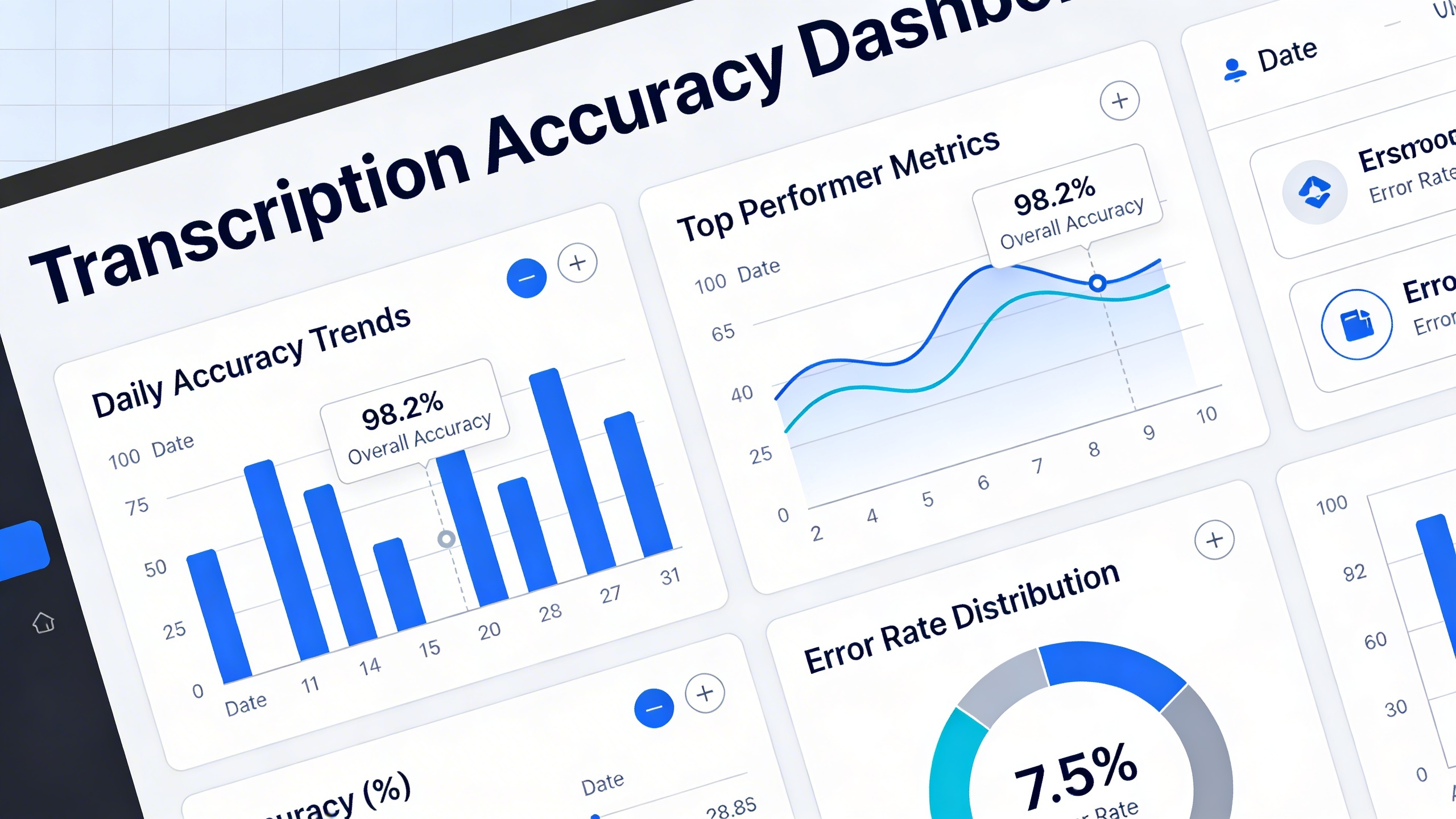
Monitor usage patterns and accuracy metrics during the first month. Most ai transcription services provide analytics dashboards showing transcription volumes, error rates, and user adoption statistics. Use this data to refine your implementation strategy and identify users who might benefit from additional training or different service features.